

Categories
New Blog
Excess energy use rarely comes from a faulty glycol chiller. It usually traces back to system design mistakes made long before the unit switched on. Operators often blame the chiller unit or the refrigerant charge. The real culprit is more often sizing, piping, fluid, or control design. Sizing errors alone can push a unit into short cycling and higher running costs. Seven checks follow: chiller capacity, pipe diameter, pump and flow design, glycol concentration, insulation, temperature control, and layout. Each section explains why that mistake wastes energy and how you can check for it on your own system.
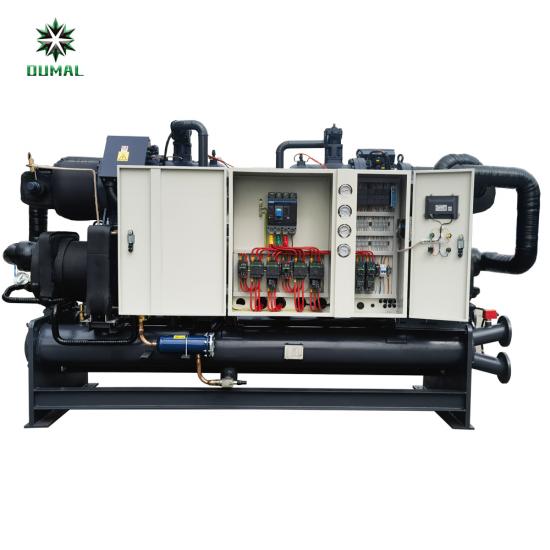
An oversized unit looks like a safe choice. It carries extra margin for a hot day or a future production line. The problem starts at light load. Industry part-load ratings (IPLV) assume chillers run mostly between 50% and 75% load. Part-load efficiency is therefore the key cost predictor. An oversized unit spends most of its life far below that band. It short-cycles at light loads, wears the compressor faster, and loses efficiency. You then consume more energy per ton of cooling than a properly sized machine would.
|
Aspect |
Properly Sized Unit |
Oversized Unit |
|---|---|---|
|
Operating range |
Runs within optimal efficiency range |
Operates far from design sweet spot |
|
Cycling behavior |
Avoids constant on/off at very low loads |
Short-cycles at light loads |
|
Energy use |
Draws only power needed for target temps |
Consumes more energy per ton of cooling |
|
Part-load performance |
Strong part-load performance during off-peak hours |
Loses efficiency at low loads |
|
Component wear |
Reduced cycling stress on compressor |
Increased wear and higher operational costs |
Oversized capacity still fits some applications well. A plant that plans a near-term expansion, or one that needs redundancy on high-ambient days, may justify the extra headroom. The mistake lies in sizing for a load that never arrives.
Start with the nameplate capacity of the chiller unit. Next, add up the connected load of every process it serves. Compare that total against real runtime data from your logs. A unit that reaches its setpoint in minutes and then idles for long stretches is oversized for the current cooling demand. Watch for simultaneous demand across circuits, too. If two loops rarely run at once, your true peak load is lower than the sum of their ratings. A screw type compressor chiller with a variable speed drive handles part-load swings better, but correct sizing still comes first.
Pipe diameter sets how fast your glycol must travel. For an incompressible fluid, cross-sectional area times velocity stays constant. Shrink the pipe and the same flow rate forces a higher velocity. Higher velocity means more fluid-to-wall contact and greater friction loss. Your pump must then raise its output to hold the design flow rate. That extra pump work shows up on your energy bill every hour.
The symptoms are easy to recognize once you know them. A pipe diameter too small for the selected pump produces high velocity, noise, vibration, and excessive energy consumption. The pump works harder and system reliability drops. Long or narrow runs make it worse. They may need pump speed adjustments or a larger impeller to overcome the added head loss. Pressure drops and leaks rank among the most common glycol chiller problems, and both often trace back to this mismatch.
You can quantify the loss instead of guessing. The Darcy-Weisbach equation accounts for pipe diameter, length, roughness, and fluid velocity. The Hazen-Williams equation estimates head loss from length, diameter, and roughness. Compare calculated losses against expected values. A large gap flags an undersized line.
Then walk the layout. Count unnecessary bends and long runs. Check that each pipe diameter matches its flow rate, especially on a glycol water cooled chiller serving several loops. An undersized unit often hides behind piping that was never resized when the load grew.
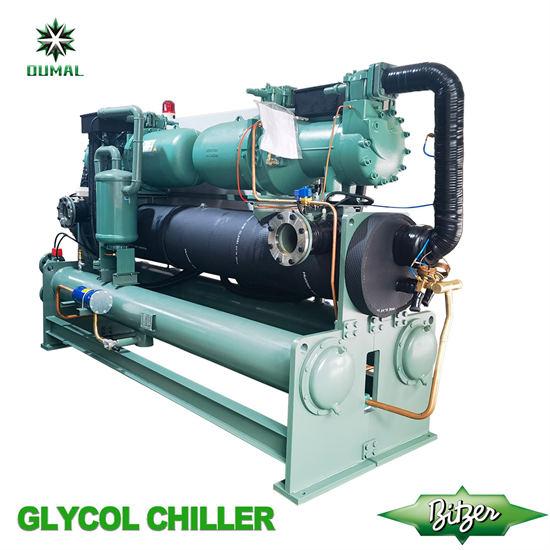
A pump sized for peak demand runs at full speed all day. Most systems only need peak flow for a few hours. A constant-speed pump keeps pushing the same volume through the loop during light loads. You pay for that excess movement in electricity, and the surplus flow can also disturb temperature stability. Variable-flow design matches pump output to the real demand. It slows the pump when valves close or loads drop. Constant-speed pumps still fit simple loops with steady demand and a single chiller unit. Variable-flow design fits systems with changing loads, multiple zones, or long distribution runs.
A mismatched pump wastes energy in a second way. The impeller may be too large for the required head, so a throttling valve absorbs the extra pressure. That valve turns useful pump work into noise and heat. On a glycol water cooled chiller, the pump must also overcome the added viscosity of the glycol mixture. A pump selected without that allowance runs near the edge of its curve and draws more current than the design predicts.
Start with the pump curve. Plot the measured flow against the measured head, then find that point on the manufacturer's curve. A point far to the right of the design point signals inadequate flow resistance or an oversized impeller. A point far to the left signals a restricted loop. Either way, the pump is not operating where it was selected to run.
Next, confirm the design glycol flow matches the chiller unit's requirement. Check the pressure drop across the evaporator against the published value at that flow. Low drop with high pump power points to bypass or excess flow. High drop points to fouling or a closed valve. On a screw type compressor chiller, the manufacturer's minimum and maximum flow limits matter, because inadequate flow can trip the unit and adequate flow protects the heat exchanger. Install a flow meter if the loop has none, and log readings across a full week of operation.
Glycol concentration governs freeze protection, heat transfer, and pumping demand at the same time. Too little glycol shrinks your freezing margin. The fluid risks slushing at the evaporator, and the chiller unit works harder to hold temperature. Too much glycol creates the opposite problem. A richer mixture turns viscous and clings to pipe walls. Pumps then burn more energy to sustain flow, and the fluid carries less heat per unit of circulation.
|
Fluid |
Specific heat capacity |
Freezing point (at 50%) |
|---|---|---|
|
Water |
~4.18 kJ/kg·K |
0°C |
|
50% Ethylene Glycol |
~3.3 kJ/kg·K |
~-36°C |
|
50% Propylene Glycol |
~3.0 kJ/kg·K |
~-32°C |
You never run glycol at 100% because of viscosity. Concentrations above 60% can reduce performance through added viscosity and weaker thermal transfer. A practical range sits between 30% and 50%. Select the lowest concentration that still meets your operating-temperature needs, and follow the manufacturer's recommended range.
Glycol breaks down over time through oxidation, contamination, and thermal stress. It forms acids and loses heat-transfer quality. Most glycol chiller problems begin in the fluid itself: a low level, a drifted percentage, or chemical breakdown. Watch for cloudy or discolored coolant, a sour odor, strainers that clog quickly, and a rising Delta T across the loop. Each water top-off on a glycol water cooled chiller dilutes the mixture further, so a slow leak quietly weakens protection.
Test concentration with a refractometer and check the fluid level on the same visit. Schedule periodic glycol analysis to catch acid formation before it damages the glycol system. Log every reading so you can spot drift early. Good fluid discipline protects efficiency and keeps runtime predictable across the season.
Every uninsulated surface on your loop pulls heat from the room into the glycol. The chiller unit must then remove that extra heat before it can hold your setpoint. Degraded insulation on lines and tanks does the same thing more quietly. The load creeps up, and runtime stretches out to match it.
Exposed piping between the chiller and the tanks is a frequent offender. Warm mechanical rooms make this worse, and many operators underestimate the effect.
Glycol line heat gain: exposed glycol piping picks up ambient heat between the chiller and the tanks. This is often underestimated, especially in warm mechanical spaces.
An Air cooled glycol chiller faces a related trap. Its condenser rejects heat into the same space, so a poorly ventilated room warms the suction lines and raises the load on both sides of the system.
Start with a visual pass over every accessible section. Look for compressed, wet, deteriorated, or missing insulation. Then bring in thermal imaging to find surface temperature differences without cutting into anything.
Condensation and cold spots deserve special attention. A sweating line means moisture is reaching the surface, and wet insulation loses most of its value. Walk the full run and note every exposed section, every sagging jacket, and every uninsulated valve or flange. Repair the worst offenders first, then recheck runtime.
Your glycol setpoint must sit low enough to cool the process and high enough to stay clear of the freeze point your glycol concentration allows. A setpoint that drifts colder wastes energy in several ways at once.
The penalty is measurable. Lowering the setpoint adds to energy use, and raising it saves energy. Standard design runs 44°F supply and 54°F return, and 44–46°F is the recommended balance. A miscalibrated leaving-fluid sensor is a primary pathway for this drift, because that probe drives free cooling, antifreeze protection, and compressor safeties. Log the glycol supply temperature daily and compare it with the value you asked for.
Missing or misconfigured controls drive energy use just as surely. Manual operation leaves glycol chiller temperature control to whoever remembers to adjust it. No scheduling means the chiller unit runs through idle hours. A wide or wrong deadband lets the glycol supply temperature swing far from target.
Audit your setpoint values against the freeze point first. Then review schedules, deadbands, and simultaneous demand across loops. Confirm the temperature controller and its sensors are calibrated, and check the supply-to-return temperature difference against design. A brewery chiller setpoint deserves the same audit, since fermentation loads shift with cooling demand. Record every setpoint change in a log, note who made it and why, and review the log monthly. A drifted setpoint rarely announces itself; the log exposes it.
A cramped mechanical room quietly raises your energy use. An Air cooled glycol chiller dumps condenser heat into the surrounding air. Blocked clearances trap that heat near the unit, and the condenser then rejects heat into already-warm air. Head pressure climbs, the compressor works harder, and runtime stretches. Dirty coils make the same problem worse. Dust and debris coat the fins, heat rejection falls, and the chiller unit compensates by running longer.
Tight placement also invites skipped maintenance. When a technician must squeeze past pipes to reach a coil, cleaning gets postponed. Grime builds up, efficiency drops further, and chiller unit maintenance and repairs grow more frequent and more costly. Layout decisions made at installation keep charging you for years.
Walk the room with a tape measure. Published guidance varies, so check your manual first. One common recommendation calls for at least 12 inches of clearance on all sides for ventilation. Another specifies at least 3 feet (36 inches) on all sides with no walls, machinery, or other objects within range. Either way, the goal is the same: let heat disperse and give technicians room to inspect and repair.
Confirm you can reach the condenser coil without dismantling anything. A glycol water cooled chiller needs service access too, even though it rejects heat to water rather than air. Then add coil cleaning to your maintenance schedule with a fixed interval. Log each cleaning and note coil condition. A clean coil and an open layout keep power draw predictable.
A structured review treats your system as one connected loop, not a stack of separate parts. OUMAL Refrigeration Machinery walks through seven checks in order. The team compares nameplate capacity against your real connected load and runtime logs. They calculate pipe friction losses and confirm each diameter suits its flow rate. Pump curves get matched to measured flow, and the design flow gets checked against the unit's requirement. Glycol concentration is tested against your operating temperatures, insulation is inspected for heat gain, and setpoints are audited against the freeze point. Layout and coil access close the review.
The company supplies every option discussed in this article, so the review carries no product bias. Each design choice gets matched to your application instead. A plant with steady loads may keep a constant-speed pump. A facility with shifting zones may move to variable flow. The goal is fit, not a sales pitch.
Request a review when energy bills climb without an obvious cause. Pressure drops, leaks, or a glycol chiller that runs longer than normal also justify a call. Watch for simultaneous demand across loops that never appears in your load calculations. These signals point to design issues rather than a failing unit.
Early action protects running costs. A review before expansion saves more than a retrofit after the fact. Bring your logs, drawings, and fluid test results, and the team can trace where the energy goes.
Seven design mistakes deserve a place on your checklist: oversized capacity, undersized piping, mismatched pumps, wrong glycol concentration, weak insulation, drifted control settings, and cramped layout. Each one quietly adds runtime and cost.
Energy problems are usually design problems. A structured review finds the cause faster than any parts swap. Start with the easy checks first: glycol concentration, glycol setpoint, insulation, and control settings. Confirm your setpoint sits above the freeze point. Then tackle the larger design changes.
Thoughtful design keeps consumption predictable for the life of the system. A partner like OUMAL Refrigeration Machinery helps you hold that course.
Compare nameplate capacity with your connected load and runtime logs. A unit that reaches setpoint in minutes and then idles for long stretches is oversized for current demand. Check whether simultaneous demand across circuits ever approaches the total rating. If it never does, your true peak load is lower than the sum of the parts.
Test with a refractometer whenever you top off the fluid, and schedule periodic glycol analysis on a fixed interval. Every water addition dilutes the mixture, so a slow leak quietly weakens freeze protection. Log each reading. Watch for cloudy coolant, a sour odor, or strainers that clog quickly — all signs of breakdown.
Yes. A constant-speed pump fits a simple loop with steady demand and a single chiller unit. Variable-flow design fits shifting loads, multiple zones, or long runs. Match the choice to your duty profile. On an Air cooled glycol chiller, confirm the pump was selected with glycol viscosity in mind, since a mismatched impeller draws extra current.
Start with the cheap checks. Verify glycol concentration and fluid level, confirm the setpoint sits above the freeze point, inspect insulation for cold spots, and review schedules and deadbands. These four checks cost little and often expose the cause. Move to piping, pumping, and capacity reviews only after they come back clean.
It can. A pipe diameter too small for the selected pump forces higher fluid velocity, and friction loss rises with it. The pump then works harder to hold design flow. On a glycol water cooled chiller, long runs and extra bends compound the loss. Compare calculated head loss against expected values before you blame the compressor.
Request one when bills climb without an obvious cause, when pressure drops or leaks persist, or when a screw type compressor chiller runs longer than normal. Bring logs, drawings, and fluid test results. A review before expansion usually saves more than a retrofit afterward, because it catches mismatches while changes stay cheap.



Friendly Links :
www.dyyseo.com en
 es