

Categories
Chiller approach temperature is an important parameter for evaluating heat transfer performance in an industrial chiller. It helps engineers understand how effectively heat moves between the refrigerant and the water or air used in the cooling process. When the approach temperature changes, it may indicate changes in operating conditions, heat exchanger performance, or system efficiency.
For industrial facilities that depend on stable process cooling, understanding chiller approach temperature can help with equipment selection, routine maintenance, and troubleshooting. Whether you operate a water-cooled screw chiller or an air-cooled industrial chiller, this measurement should be considered alongside cooling capacity, water flow, operating pressure, and ambient conditions.
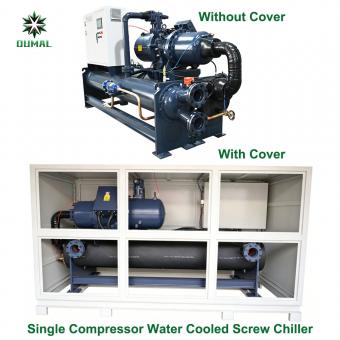
An industrial water-cooled screw chiller with heat exchangers and refrigeration components.
Chiller approach temperature is the temperature difference between two fluids or between a fluid and a heat exchanger's refrigerant saturation temperature at a specified operating point. In practical chiller engineering, the term commonly refers to the temperature difference at the evaporator or condenser.
A smaller approach temperature generally indicates that heat is being transferred with a smaller temperature difference. Under comparable operating conditions, this can indicate good heat exchanger performance. However, a low approach temperature alone does not guarantee that the entire chiller is operating efficiently. Compressor power, refrigerant conditions, water flow, and total cooling load also matter.
For industrial cooling systems, engineers usually distinguish between two important measurements:
These measurements describe different parts of the refrigeration cycle. They should be calculated separately rather than treated as interchangeable values.
The calculation depends on the heat exchanger being evaluated. Before calculating the approach, confirm that the temperature readings come from the correct measurement points and represent the same operating period.
Evaporator approach temperature formula:
Evaporator Approach = Leaving Chilled Water Temperature − Evaporating Refrigerant Saturation Temperature
For example, if chilled water leaves the evaporator at 7°C and the refrigerant saturation temperature is 3°C, the evaporator approach is:
7°C − 3°C = 4°C
Condenser approach temperature formula for a water-cooled chiller:
Condenser Approach = Condensing Refrigerant Saturation Temperature − Leaving Condenser Water Temperature
For example, if the condensing saturation temperature is 36°C and the condenser water leaves at 31°C, the condenser approach is 5°C.
These examples are for explaining the calculation, not universal design targets. The appropriate approach temperature depends on the chiller design, refrigerant, heat exchanger arrangement, load, water flow, and manufacturer specifications.
It is also important not to confuse approach temperature with chiller Delta T. Delta T refers to the difference between the chilled water return and supply temperatures. You can learn more about this separate measurement in OUMAL's article on what chiller Delta T is and why it matters.
Approach temperature provides useful information about heat exchanger performance and the operating conditions of a refrigeration system. When monitored consistently, it can help maintenance teams identify changes before they develop into more serious performance issues.
Heat transfer performance: A rising approach temperature may indicate that heat transfer has become less effective. Possible reasons include fouling, scale, reduced water flow, air accumulation, or changes in operating load.
Energy consumption: In a water-cooled chiller, a higher condenser approach can contribute to a higher condensing temperature. The compressor may then need to work against a greater pressure difference, increasing energy consumption under otherwise comparable conditions.
Cooling capacity: If heat transfer is restricted, the system may struggle to maintain the required chilled water temperature when process demand increases. The actual effect depends on the chiller design and operating conditions.
Maintenance planning: Comparing current readings with commissioning data and historical trends helps engineers determine whether a heat exchanger requires inspection or whether another operating parameter has changed.
For plants with demanding cooling loads, selecting an appropriately designed industrial chiller system is an important first step. Correct sizing and operating conditions are just as important as monitoring approach temperature after installation.
There is no single approach temperature that is suitable for every industrial chiller. The expected value depends on the heat exchanger design, the type of chiller, refrigerant properties, water flow, fouling condition, and the load at which the system operates.
For example, a water-cooled screw chiller and an air-cooled chiller reject heat differently. Their heat exchanger arrangements and operating conditions are not identical, so their approach measurements should not be compared as though they were designed to meet the same target.
When evaluating an approach temperature, engineers should consider:
A reading that is acceptable for one machine may be abnormal for another. For this reason, use the manufacturer's documentation and commissioning baseline rather than applying a universal threshold to every installation.
A high evaporator approach means the temperature difference between the leaving chilled water and the refrigerant saturation temperature is larger than expected. Several conditions can cause this change.
Fouling inside the heat exchanger: Deposits, dirt, or other contaminants can add thermal resistance and reduce heat transfer. Depending on the evaporator design, water quality and regular maintenance are important for limiting this problem.
Insufficient chilled water flow: A restricted filter, partially closed valve, pump problem, or air trapped in the water circuit may affect flow through the evaporator. The resulting temperature readings should be evaluated together with pressure drop and flow measurements.
Incorrect operating conditions: Changes in cooling load, refrigerant charge, expansion valve operation, or control settings may affect evaporating temperature and cooling performance. A high approach should therefore not automatically be attributed to a dirty heat exchanger.
Sensor or measurement errors: An inaccurate temperature sensor or an incorrect refrigerant pressure-to-saturation-temperature conversion can produce a misleading result. Confirm instrument accuracy and measurement locations before making adjustments.
If the evaporator approach increases unexpectedly, record the chilled water inlet and outlet temperatures, refrigerant pressure, flow rate, and load. Comparing these values with the manufacturer's data will help narrow down the likely cause.
For a water-cooled chiller, a high condenser approach indicates a larger-than-expected difference between the condensing refrigerant saturation temperature and the leaving condenser water temperature.
Scale or deposits on heat transfer surfaces: Mineral scale and other deposits can reduce heat transfer between the refrigerant and condenser water. Water treatment and appropriate cleaning procedures help maintain heat exchanger performance.
Low condenser water flow: Pump performance, blocked strainers, valve positions, and piping restrictions can affect water flow. Confirm the actual flow and pressure drop before deciding whether the water circuit is responsible.
Cooling tower performance: In a water-cooled system, cooling tower conditions affect the temperature of the water entering the condenser. High entering water temperature can raise the condensing temperature, but it does not by itself prove that the condenser approach is high. Both temperatures must be checked.
Refrigeration system issues: Non-condensable gases, refrigerant-related problems, or abnormal operating pressures may influence condenser performance and require qualified technical investigation.
OUMAL offers water-cooled chiller systems for industrial applications. When choosing a system, consider the required cooling capacity, condenser water conditions, operating schedule, and maintenance arrangements rather than relying on a single temperature value.
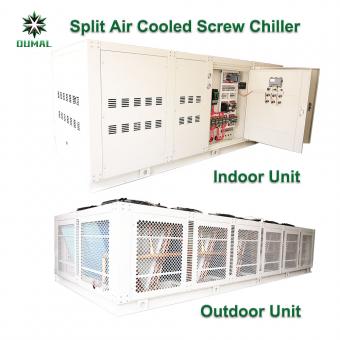
An OUMAL split air-cooled screw chiller system for industrial cooling.
The correct improvement method depends on which heat exchanger shows an abnormal reading. Start with measurements and inspection instead of changing control settings without identifying the cause.
Clean heat transfer surfaces when necessary. Inspect the evaporator and condenser according to the manufacturer's maintenance instructions. Use cleaning methods compatible with the heat exchanger materials and the type of contamination.
Check water flow and filtration. Inspect pumps, strainers, valves, and piping for restrictions. Confirm that the actual flow is consistent with the equipment's design requirements. Increasing flow without checking the permitted operating range can create other problems.
Verify sensors and operating data. Check temperature sensors, pressure transducers, and control readings. Use the correct refrigerant pressure-temperature relationship when determining saturation temperatures.
Review cooling tower operation. For water-cooled systems, inspect tower performance, water distribution, and condenser water temperatures. Make sure the tower and chiller are operating within their specified ranges.
Monitor trends rather than isolated readings. Record approach temperatures alongside cooling load, supply and return water temperatures, flow, ambient conditions, and power consumption. This makes it easier to distinguish a genuine performance change from normal variation in operating conditions.
For applications that require higher cooling capacity or extended operating hours, air-cooled screw chillers and water-cooled screw chillers should be evaluated according to the site conditions and process requirements. The best solution is the one that meets the required duty while remaining practical to operate and maintain.
Chiller design influences how approach temperature is measured and what factors affect it. The most important distinction is between air-cooled and water-cooled systems.
Water-cooled chillers typically use a water-cooled condenser connected to a cooling tower or another heat rejection source. Engineers can calculate condenser approach using the refrigerant condensing saturation temperature and leaving condenser water temperature. Water quality, water flow, and condenser cleanliness are important factors.
Air-cooled chillers reject heat through a refrigerant-to-air condenser. Ambient air temperature, fan operation, coil cleanliness, and airflow influence condensing conditions. A water-cooled condenser approach formula should not be applied directly to an air-cooled condenser without defining the relevant measurement points.
For projects where cooling requirements vary, air-cooled screw chiller solutions may simplify installation by avoiding the need for a cooling tower. Water-cooled systems may be appropriate for facilities with suitable water infrastructure and demanding continuous cooling loads. The selection should be based on total system requirements, not approach temperature alone.
For applications requiring coolant below the freezing point of water, a properly designed glycol cooling system may also be worth evaluating. Coolant concentration affects heat transfer, viscosity, and pumping requirements, so the system must be selected for the intended operating temperature.
Approach temperature is most useful when it is part of a wider operating review. A practical monitoring routine should include the following information:
Measurements should be taken under reasonably stable conditions whenever possible. If the cooling load or water flow changes significantly, the approach temperature may change as well. Consistent measurement methods make trend data much more useful for maintenance decisions.
For a new installation or a replacement project, OUMAL's industrial chiller range can be reviewed alongside the required cooling capacity, target water temperature, site environment, and operating schedule. Sharing these details with the manufacturer helps ensure the selected equipment is suited to the actual process.
What does chiller approach temperature tell you?
It indicates the temperature difference across a specified heat exchanger boundary. Engineers use evaporator and condenser approach temperatures to assess heat transfer performance and identify changes in operating conditions.
Is a lower chiller approach temperature always better?
Not necessarily. A lower approach can indicate effective heat transfer under comparable conditions, but overall efficiency also depends on compressor power, water flow, cooling load, and system design. Measurements should be evaluated against manufacturer specifications.
What is the difference between approach temperature and Delta T?
Approach temperature compares a fluid temperature with the refrigerant saturation temperature at a heat exchanger. Chilled water Delta T is the difference between the return water temperature and supply water temperature. They describe different aspects of chiller operation.
Why does my evaporator approach temperature keep increasing?
Possible causes include heat exchanger fouling, insufficient water flow, changes in operating load, refrigerant-related issues, or inaccurate sensors. Check the relevant temperatures, pressures, flow, and operating conditions before deciding on corrective action.
Does a high condenser approach mean the cooling tower is faulty?
No. A high condenser approach may result from condenser fouling, low water flow, refrigerant-side problems, or measurement errors. Cooling tower performance affects condenser operating conditions, but the approach calculation must be checked using the correct temperatures.
Can approach temperature help reduce chiller energy consumption?
Yes, when it is used as part of a broader performance monitoring process. Identifying heat transfer problems and correcting their underlying causes may help restore efficient operation. Energy savings depend on the specific fault, operating conditions, and corrective action.
How often should chiller approach temperature be checked?
The monitoring frequency depends on the application, operating hours, process criticality, and manufacturer recommendations. Systems with continuous or critical cooling requirements may benefit from regular trend monitoring, while all systems should be checked during scheduled maintenance and when performance changes unexpectedly.
Chiller approach temperature is a useful indicator of heat exchanger performance, but it should never be interpreted in isolation. Evaporator approach and condenser approach use different temperature measurements, and the correct calculation depends on the chiller design.
When an approach reading increases, check water flow, heat exchanger cleanliness, refrigerant operating conditions, sensor accuracy, and cooling load before making adjustments. Comparing readings with the manufacturer's specifications and historical data provides a more reliable basis for troubleshooting.
For industrial cooling projects, OUMAL can help users evaluate chiller configurations according to cooling capacity, required water temperature, heat rejection method, and site conditions. Contact the OUMAL team through the official OUMAL website to discuss your application and equipment requirements.



Friendly Links :
www.dyyseo.com en
en es
es