

Categories
When engineers evaluate an industrial chiller system, they usually look at cooling capacity, water flow, inlet and outlet temperature, power consumption, and operating conditions. One parameter that connects several of these factors is chiller Delta T.
Delta T, short for temperature difference, is the difference between the chilled water return temperature and the chilled water supply temperature. It is a simple number, but it can tell you a lot about how heat is being transferred through an industrial cooling system.
For example, if chilled water enters the process at 12°C and returns to the chiller at 17°C, the chilled water Delta T is 5°C. OUMAL product specifications also use chilled water flow and inlet/outlet temperature as important engineering parameters when configuring industrial chiller systems.
For manufacturers and users of industrial cooling equipment, understanding Delta T can help with system design, chiller sizing, water flow evaluation, troubleshooting, and performance monitoring.
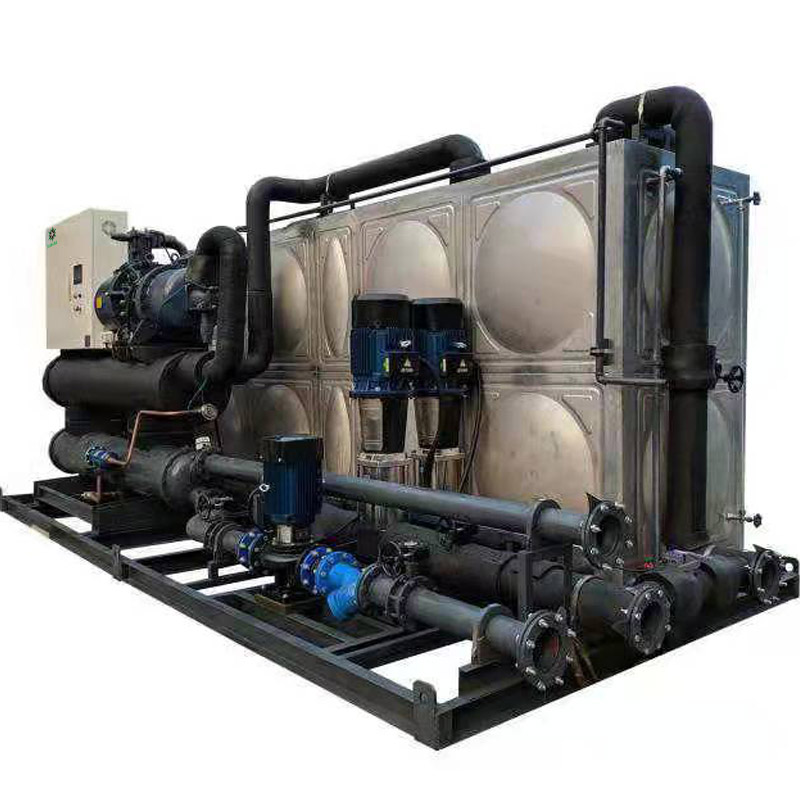
Chiller Delta T is the temperature difference between the chilled water entering the chiller and the chilled water leaving the chiller.
The basic calculation is:
Chiller Delta T = Return Water Temperature − Supply Water Temperature
For example:
| Parameter | Example Value |
| Chilled Water Supply Temperature | 12°C |
| Chilled Water Return Temperature | 17°C |
| Chiller Delta T | 5°C |
This means the chilled water has absorbed approximately 5°C of temperature rise while removing heat from the process before returning to the chiller.
For industrial applications, Delta T should not be considered by itself. It should be evaluated together with cooling capacity, chilled water flow, process heat load, and the required supply temperature.
The calculation itself is straightforward. You only need the chilled water supply temperature and return temperature.
Example: If the chiller supplies water at 7°C and the return water temperature is 12°C:
Delta T = 12°C − 7°C = 5°C
If the supply temperature remains at 7°C but the return temperature increases to 15°C, the Delta T becomes 8°C.
This change does not automatically mean that the chiller is operating incorrectly. The reason for the higher Delta T could be increased process heat load, reduced water flow, changes in process conditions, or other system factors.
That is why Delta T is best used as a performance indicator rather than as a single pass/fail value.
Delta T matters because it shows how much the chilled water temperature changes as the water passes through the process or cooling loop.
In a practical industrial cooling system, Delta T is closely related to three important factors:
A system with a stable and properly understood Delta T makes it easier to evaluate whether the chiller, pump, piping, and process are working together as expected.
OUMAL offers different industrial chiller configurations, including industrial water chillers designed for different cooling requirements and operating conditions.
Delta T is directly related to the amount of heat removed from the circulating water. In simplified terms, when the water flow rate and fluid properties are known, a larger temperature difference means the water has absorbed more heat per unit of water passing through the system.
For a water-based cooling system, the relationship can be expressed conceptually as:
Cooling Load ≈ Water Flow × Specific Heat × Delta T
This is one reason why engineers do not select an industrial chiller based only on the desired outlet temperature.
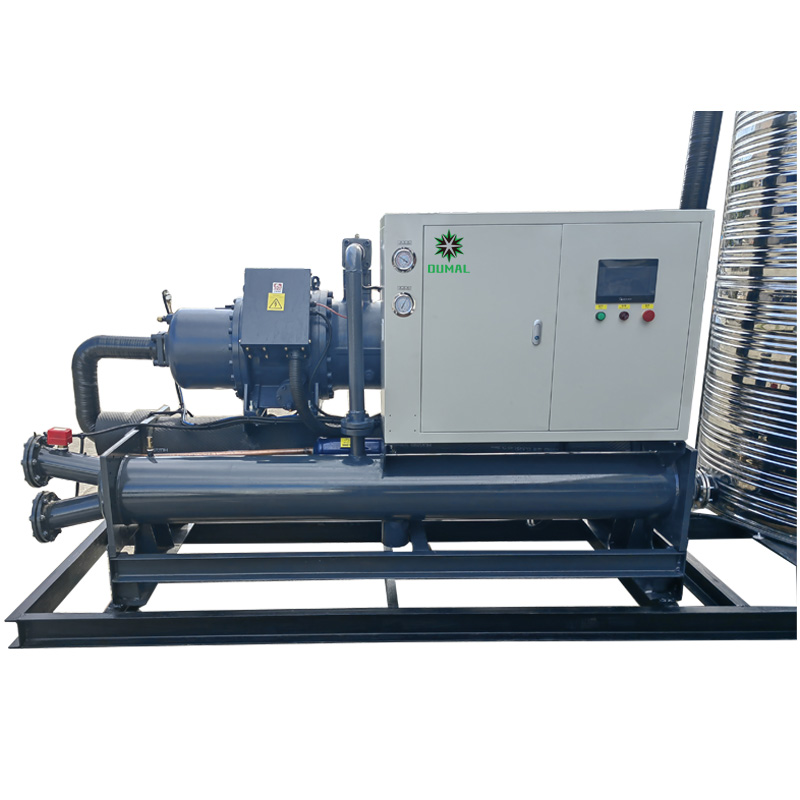
For example, OUMAL's integrated water-cooled screw chiller specifications include both chilled water flow and cooling capacity. The 75 HP model shown on the product page has a listed chilled water flow of 46.4 m³/h and a cooling capacity of approximately 269.7 kW.
When evaluating a real project, the actual values need to be calculated according to the process heat load, fluid properties, required temperatures, and operating conditions.
No. A higher Delta T does not automatically mean that the chiller is more efficient or that the system is performing better.
Delta T needs to be interpreted together with water flow and heat load.
For example, a higher Delta T may occur because the production process is adding more heat to the circulating water. It could also be related to a reduction in water flow.
On the other hand, an unusually small Delta T may indicate that the water is moving through the system too quickly to absorb the expected amount of heat, although the actual cause depends on the complete system design.
The important point is that Delta T should be compared with the design conditions of the specific chiller and process, rather than judged using one universal number.
A lower-than-expected Delta T can have several possible causes. The most common possibilities should be checked against the actual operating conditions rather than assumed immediately.
For this reason, when a Delta T value changes, operators should record the supply temperature, return temperature, water flow, process load, and chiller operating status at the same time.
This approach provides much more useful information than looking at Delta T alone.
A high Delta T can also have different causes depending on the system.
If Delta T suddenly changes compared with the normal operating condition, it is useful to check both the process side and the chilled water side.
Do not automatically assume that a high Delta T means the chiller itself has a refrigeration fault.
Water flow has a strong relationship with Delta T.
If the heat load remains approximately constant, increasing water flow generally reduces the temperature rise across the process because the same amount of heat is distributed across a larger amount of circulating water.
Conversely, reducing water flow can increase the temperature difference because each unit of water absorbs more heat while passing through the process.
However, water flow cannot simply be increased or decreased without considering the chiller evaporator, pump, piping, pressure drop, and process requirements.
OUMAL's product specifications commonly include chilled water flow as an important design parameter. For example, the 500 kW water-cooled screw chiller lists a chilled water flow of 86 m³/h.
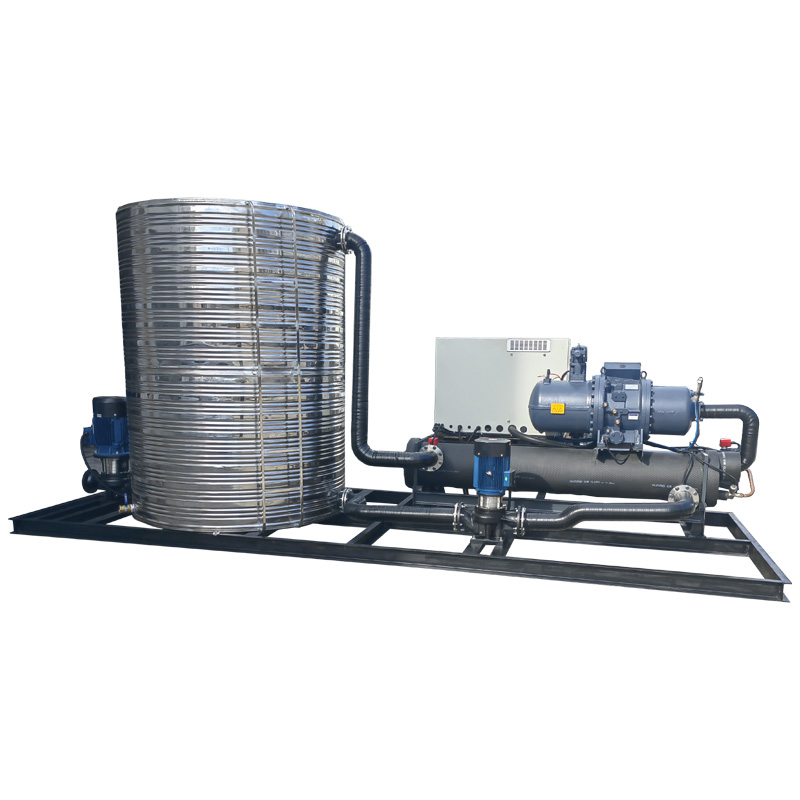
For projects requiring an integrated cooling system, OUMAL also offers integrated water-cooled screw chillers with tank and pumps, which combine the main chiller with water tank and circulation pumps.
There is no single Delta T value that is correct for every industrial chiller.
The appropriate Delta T depends on the application, process heat load, chilled water flow, supply temperature, return temperature, heat exchanger design, and overall system configuration.
For this reason, the design Delta T should be determined when the cooling system is engineered.
For example, a system designed around 5°C supply water and 10°C return water has a 5°C Delta T. Another process may require different supply and return temperatures based on its production requirements.
OUMAL's product information shows that different industrial chillers can be configured for different temperature ranges and flow requirements. Its water-cooled screw chiller range, for example, includes models with chilled water temperature ranges around 3–20°C, while customized solutions are available for different applications.
For industrial applications, Delta T is more useful when it is monitored as a trend rather than checked only once.
A practical monitoring record can include:
| Parameter | Why It Matters |
| Supply Water Temperature | Shows the temperature supplied to the process |
| Return Water Temperature | Shows the temperature after absorbing process heat |
| Delta T | Shows the temperature difference across the cooling loop |
| Chilled Water Flow | Helps explain changes in Delta T |
| Cooling Load | Shows how much heat the process is adding |
| Chiller Operating Status | Helps identify partial-load or abnormal operating conditions |
Modern industrial chillers can also use PLC-based control systems to monitor operating conditions. OUMAL's water-cooled screw chiller products include Siemens PLC control systems on selected models, supporting temperature control and system monitoring.
When an industrial chiller is being specified for a new project, Delta T should be included in the technical discussion rather than treated as an afterthought.
A chiller manufacturer normally needs information such as:
These parameters help the manufacturer determine the appropriate chiller configuration and supporting equipment.
For projects that require larger cooling capacity, OUMAL provides water-cooled screw chiller solutions with different capacities and configurations.
Yes. A sudden change in Delta T can be a useful signal that something in the cooling system has changed.
For example, if the supply temperature remains stable but the return temperature suddenly increases, the process may be receiving a higher heat load, the water flow may have changed, or the cooling circuit may require inspection.
If Delta T becomes unusually small, operators can check water flow, process load, temperature sensors, and operating conditions before assuming that the refrigeration system itself has failed.
Delta T should therefore be treated as one part of a wider diagnostic picture. It works best when evaluated together with water flow, pressure, temperatures, compressor loading, and process conditions.
Industrial process cooling is not simply about producing cold water. The cooling system must remove the required amount of heat while maintaining the temperature conditions required by the production process.
Delta T provides a simple way to understand how much the circulating water temperature changes as it removes heat.
For applications such as plastic processing, chemical production, food processing, metal finishing, and other continuous industrial processes, stable cooling conditions can directly affect production consistency and equipment operation.
OUMAL provides industrial cooling systems for different process requirements, including process chillers and customized industrial cooling solutions.
Chiller Delta T is the difference between chilled water return temperature and chilled water supply temperature. It is a simple parameter, but it can provide useful information about heat transfer, water flow, process load, and overall cooling system operation.
The most important points are:
For a new industrial cooling project, providing the manufacturer with accurate process temperature, return temperature, water flow, and heat load information can make chiller selection and system design much more accurate.
Chiller Delta T is the difference between the chilled water return temperature and the chilled water supply temperature. It indicates how much the water temperature changes while absorbing heat from the process.
The basic formula is: Delta T = Return Water Temperature − Supply Water Temperature. For example, 12°C return water and 7°C supply water produce a 5°C Delta T.
Low Delta T can be related to high water flow, low process heat load, partial-load operation, temperature measurement issues, or changes in the cooling circuit. The actual cause should be determined from the complete operating data.
High Delta T can occur when the process heat load increases, chilled water flow decreases, or the cooling circuit changes. It should be checked together with water flow, process load, and supply temperature.
A 5°C Delta T is a commonly used design example, but it should not be treated as a universal requirement. The correct Delta T depends on the chiller design, process load, water flow, and required operating temperatures.
Yes. Cooling load is related to fluid flow rate, fluid heat capacity, and temperature difference. Therefore, Delta T is an important parameter when evaluating the relationship between chilled water flow and cooling load.



Friendly Links :
www.dyyseo.com en
en es
es