
Categories
Choose a water cooled chiller for high-volume metal finishing. It offers superior cooling efficiency and stable temperatures, essential for product quality.
Select an air cooled chiller for quick installation and limited space. It provides flexibility and lower upfront costs, making it ideal for smaller operations.
Consider your facility's water availability. Water cooled chillers need a reliable water supply, while air cooled models work well in areas with water restrictions.
Evaluate the long-term value of your chiller choice. Water cooled systems may have higher initial costs but often lead to lower operating expenses and better performance over time.
Match your chiller to your shop's specific needs. Assess factors like climate, space, and cooling requirements to optimize performance and manage costs effectively.
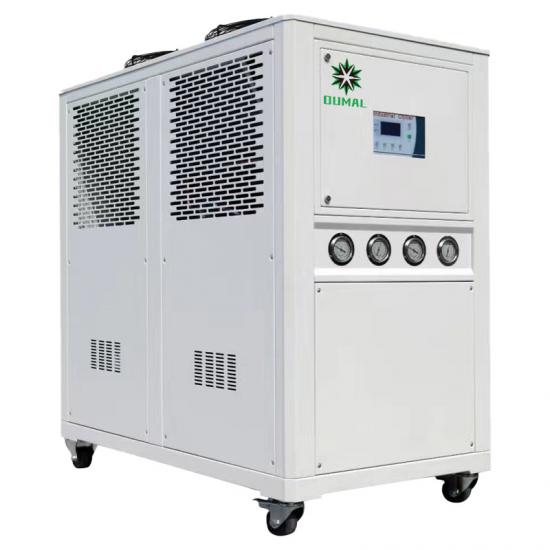
You need a clear overview when choosing between a 10 hp water cooled chiller and an air cooled chiller for your metal finishing shop. The table below highlights the main features, performance, and suitability for metal finishing applications. You can quickly see how each cooling system fits your operational needs.
|
Factor |
Air Cooled Chiller |
Water Cooled Chiller |
|---|---|---|
|
Capacity Range |
2RT to 300RT |
3RT to 1,000RT |
|
Cooling Efficiency |
High in moderate climates |
Superior in demanding environments |
|
Temperature Stability |
Consistent, easy to manage |
Excellent, ideal for precision |
|
Installation Complexity |
Simple — outdoor placement, connect power and water |
More complex — cooling tower, piping, water treatment |
|
Space Requirements |
Compact, minimal infrastructure |
Requires more space and support |
|
Maintenance |
Low, easy access |
Higher, more components |
|
Suitability for Metal Finishing |
Great for small to medium shops |
Best for large-scale, high-volume operations |
Tip: If you operate in a facility with limited space or water supply, air cooled chillers offer a straightforward solution. You can install them outdoors and connect them with minimal effort. Water cooled chillers deliver unmatched cooling performance and temperature stability, especially for high-volume metal finishing.
Air cooled chillers provide flexibility and ease of installation. You can use them in shops where quick setup matters.
Water cooled chillers excel in environments where precise cooling and stable temperatures are critical for product quality.
Cooling capacity varies. Air cooled models cover a wide range, but water cooled units handle larger loads and more demanding processes.
Installation complexity differs. Air cooled chillers require less infrastructure, while water cooled chillers need cooling towers and additional piping.
If you visualize the comparison, a bar chart would show water cooled chillers leading in cooling capacity and efficiency, while air cooled chillers score higher in installation simplicity.
You should weigh these differences based on your shop’s size, workflow, and cooling requirements. The right choice ensures consistent results and reliable operation in your metal finishing process.
You demand consistent cooling efficiency in metal finishing. Liquid cooled chillers deliver superior results because they use water as the heat transfer medium. Water absorbs heat quickly and maintains stable temperatures. You see this advantage in the OUMAL 10 HP Air to Water Cooled Metal Finishing Chiller. The unit offers a robust cooling capacity of 25 KW, which meets the demands of anodizing, plating, and other metal finishing processes. Liquid cooled systems use large copper condensing coils with aluminum fins to maximize heat exchange. You benefit from rapid heat removal and minimal temperature fluctuations.
Air cooled chillers rely on ambient air to dissipate heat. You find these systems effective in moderate climates and smaller shops. Air cooling works well when you need a simple setup and quick installation. However, liquid cooled chillers outperform air cooled models in environments where high heat loads and precision matter. You notice that engine cooling in industrial applications often uses liquid cooling for this reason. Engine performance improves when you maintain optimal temperatures. You achieve higher cooling efficiency with liquid cooled systems because water transfers heat more effectively than air.
Note: If you operate in a facility with high-volume production or intense heat generation, liquid cooled chillers provide unmatched cooling efficiency. You ensure consistent results and protect your equipment from overheating.
Temperature stability shapes the quality of your finished products. Liquid cooled chillers offer precise control, maintaining temperatures within a narrow range. The OUMAL chiller features a temperature control range from 5℃ to 35℃ with a precision of ±0.5℃ to ±2℃. You can rely on this stability for processes like anodizing, where even minor temperature shifts affect the outcome. Liquid cooling systems use stainless steel water tanks and pumps to deliver steady chilled water flow. You avoid sudden spikes or drops in temperature.
Air cooled chillers also provide stable operation, but you may see more variation in extreme climates or high-load conditions. Air cooling depends on ambient air temperature, which can fluctuate throughout the day. You notice that engine cooling in vehicles often uses liquid cooling to maintain consistent engine performance. In metal finishing, you want to minimize temperature swings to ensure uniform coatings and finishes. Liquid cooled chillers give you the control you need for demanding applications.
Tip: For shops that require tight temperature control and minimal variation, liquid cooled chillers are the preferred choice. You maintain product quality and reduce the risk of defects.
You understand that cooling directly impacts product quality in metal finishing. Liquid cooled chillers help you achieve smooth, uniform finishes by keeping temperatures steady. You see fewer defects, better adhesion, and improved surface properties. The OUMAL chiller’s advanced micro-computer control panel lets you monitor and adjust settings easily. You maintain optimal conditions for every batch.
Air cooled chillers support quality results in smaller operations or moderate climates. You benefit from their simplicity and reliability. However, liquid cooling systems excel when you need high precision and consistency. Engine cooling in industrial settings often uses liquid cooling to protect sensitive components and enhance engine performance. You apply the same principle in metal finishing. Liquid cooled chillers reduce the risk of overheating, ensure stable operation, and deliver superior product quality.
|
Chiller Type |
Cooling Efficiency |
Temperature Stability |
Product Quality |
|---|---|---|---|
|
Liquid Cooled |
Superior |
Excellent |
High |
|
Air Cooled |
High (moderate) |
Good |
Reliable |
Callout: You maximize your shop’s performance and product quality by choosing the right cooling system. Liquid cooled chillers give you the edge in demanding metal finishing environments.
When you compare the initial investment for a 10 hp chiller, you notice clear differences between air cooled and liquid cooled options. Air cooled chillers usually have a lower upfront price. You can install them quickly, which reduces labor costs. You do not need a cooling tower or extra piping. This makes air cooled systems attractive for shops with limited budgets or space.
Liquid cooled chillers require a higher initial investment. You must purchase a cooling tower, additional piping, and water treatment equipment. The installation process takes more time and planning. You also need to consider the cost of a water-cooled compressor, which adds to the total. However, this investment often pays off in demanding environments where precise temperature control is critical for your metal finishing process.
Tip: If you want a simple setup and fast installation, air cooled chillers offer a cost-effective solution. If your shop handles high-volume production or needs tight temperature control, investing in a liquid cooled system can deliver better long-term results.
Operating costs play a major role in your decision. Air cooled chillers use ambient air to remove heat. You do not need to pay for water, but you may see higher energy costs because air cooling is less efficient in hot climates. The air-cooled compressor works harder when temperatures rise, which increases your power consumption. You also need to clean the condenser coils regularly to keep the system running smoothly.
Liquid cooled chillers use water as the heat transfer medium. Water absorbs heat more efficiently than air, so the compressor does not need to work as hard. This reduces your energy use, especially in large-scale operations. However, you must pay for water and water treatment chemicals. You also need to maintain the cooling tower and pumps. If you operate in an area with high water prices, these costs can add up. Still, many shops find that liquid cooling offers lower total operating costs over time, especially when you run the system continuously.
|
Cost Factor |
Air Cooled Chiller |
Liquid Cooled Chiller |
|---|---|---|
|
Upfront Equipment |
Lower |
Higher |
|
Installation |
Simple |
Complex |
|
Water Use |
None |
Ongoing |
|
Energy Use |
Higher (hot climates) |
Lower (efficient transfer) |
|
Maintenance |
Minimal |
More frequent |
Note: You should always factor in local water and energy costs when choosing your cooling system. The right choice depends on your facility’s needs and your region’s utility rates.
Long-term value goes beyond the initial price tag. Air cooled chillers provide reliable performance for many years, especially in moderate climates. You benefit from simple maintenance and fewer components. If you run a small or medium shop, air cooled engines and compressors can meet your needs without high ongoing costs.
Liquid cooled chillers deliver superior performance in demanding environments. You see the benefits in product quality and process consistency. Liquid cooling systems extend the life of your equipment by preventing overheating. Many industries use liquid cooled engines for this reason. You also gain more precise temperature control, which reduces waste and improves your bottom line. The compressor in a liquid cooled system often lasts longer because it operates under less stress.
When you look at total cost of ownership, you should consider all factors: purchase price, installation, operating costs, maintenance, and system lifespan. The following bar chart suggests how total cost of ownership might compare over a 10-year period:
Bar Chart: Total Cost of Ownership (10 Years)
|--------------------------|
| Air Cooled      | ██████ |
| Liquid Cooled   | █████████ |
|--------------------------|
*Note: Actual costs vary by location, usage, and facility needs.
Callout: You maximize your investment by choosing a chiller that matches your shop’s production volume, climate, and long-term goals. Liquid cooling often delivers greater value for high-demand operations, while air cooling keeps costs low for smaller shops.
You should always evaluate your specific requirements before making a final decision. Consider the type of compressor, the role of the engine in your process, and the overall efficiency of your cooling system. Whether you choose an air cooled motorcycle style setup or a robust liquid cooled solution, the right chiller will support your shop’s success for years to come.
You need to consider installation steps before choosing a chiller for your metal finishing shop. Air cooled chillers offer a straightforward process. You can place the unit outdoors or in a well-ventilated area. You connect the power supply and water lines, then check for proper airflow around the unit. This setup works well if you want minimal disruption and fast deployment.
Water cooled chillers require a more detailed approach. You must install the chiller in a machine room where the temperature stays below 44℃. You select the right pipe diameters and connect them for maximum power operation. You follow standard methods for designing and installing chilled water and cooling water pipes. Vibration damping pipes help reduce noise and wear. You also install a filter at the water pipe inlet and schedule regular cleaning.
If your system uses a cooling tower, you select a level, well-ventilated location. You prepare a strong foundation to support the tower. You assemble the components according to the manufacturer’s instructions. You connect water lines from the chiller to the tower, making sure they are properly sized and insulated. You complete electrical connections following safety standards. You test the system to confirm performance and plan for regular maintenance.
Tip: Air cooled chillers save you time and labor during installation. Water cooled systems need more planning but deliver higher performance for demanding applications.
You must evaluate your available space and facility infrastructure. Air cooled chillers feature a compact design and require minimal support. You can install them outdoors, freeing up valuable indoor space. The OUMAL 10 HP Air to Water Cooled Metal Finishing Chiller stands out with its small footprint and easy integration into existing layouts.
Water cooled chillers need more room for the unit, piping, and cooling tower. You must allocate space for maintenance access and water treatment equipment. This setup suits larger facilities with dedicated mechanical rooms and robust infrastructure.
Callout: Choose a chiller that fits your shop’s layout and future expansion plans. Compact air cooled models like OUMAL simplify installation and maximize your workspace.
You need to keep your chiller running at peak performance. Regular maintenance ensures your system delivers reliable cooling and protects your investment. Both water cooled and air cooled chillers require routine checks, but the tasks and intervals can differ. You should monitor the compressor closely, as it is the heart of your system. The engine that drives the compressor must operate smoothly to avoid unexpected breakdowns.
Here is a quick overview of typical maintenance tasks for both chiller types:
|
Maintenance Phase |
Task Description |
|---|---|
|
Daily/Weekly |
Record operating parameters including chilled water supply and return temperatures, condenser water temperatures, refrigerant pressures, and compressor motor running amps. |
|
Monthly |
Perform electronic refrigerant leak tests, check refrigerant charge, and inspect moisture indicators. |
|
Quarterly |
Inspect heat exchangers, calculate approach temperatures, and clean condenser tubes. |
|
Annual |
Conduct comprehensive refrigerant leak tests, oil analysis, and full inspection of electrical and mechanical systems. |
You should schedule these tasks to prevent costly downtime. Air cooled chillers often require less frequent cleaning, especially for the air-cooled compressor, but you must still check for debris and airflow issues. Water cooled systems need more attention to water quality and condenser tube cleaning.
You want your chiller to run with minimal interruptions. Reliable operation depends on the durability of the compressor, the engine, and the electrical components. The OUMAL 10 HP Air to Water Cooled Metal Finishing Chiller stands out with advanced safety features. You benefit from compressor overheating protection, over-current protection, and flow protection. These features reduce the risk of sudden shutdowns and extend the life of your equipment.
A well-maintained chiller uses less energy and delivers consistent power to your metal finishing process. You avoid production delays and protect your investment. When you follow a regular maintenance schedule, you keep your compressor, engine, and cooling system in top condition.
Tip: Choose a chiller with built-in safety features and a reputation for reliability. You will see fewer breakdowns and lower maintenance costs over time.
You must evaluate your water resources before selecting a chiller for your metal finishing shop. Water cooled chillers require a steady and reliable water supply. If your facility has access to abundant water, you can benefit from higher energy efficiency and a longer equipment lifespan. These systems deliver more effective cooling performance, especially in high-demand environments. In contrast, air cooled chillers do not depend on water. You can install them in locations where water is scarce or expensive.
Here is a quick comparison:
|
Feature |
Water-Cooled Chillers |
Air-Cooled Chillers |
|---|---|---|
|
Energy Efficiency |
Higher |
Lower |
|
Lifespan |
Longer |
Shorter |
|
Cooling Performance |
More Effective |
Less Effective |
Tip: If your shop faces water restrictions or high water costs, you should consider air cooled chillers. If you have a stable water supply, water cooled systems offer superior efficiency and durability.
You need to match your chiller choice to your facility’s constraints and local climate. Air cooled chillers work well in smaller spaces or where installation area is limited. You can place them outdoors, which saves valuable indoor space. Water cooled chillers suit large facilities that require stable operation and can support the necessary infrastructure.
Consider these common facility constraints:
|
Constraint Type |
Description |
|---|---|
|
Available Installation Space |
Air-cooled systems are suitable for smaller or space-constrained sites. |
|
Environmental Conditions |
Outdoor factors like temperature and humidity affect the choice; water-cooled systems are better for large facilities needing stable operation. |
|
Operational Profile |
Increased operating hours and stable load profiles favor the efficiency of water-cooled systems. |
|
Lifecycle Costs |
Water-cooled systems often provide better long-term cost optimization and CO₂ reduction. |
You should also factor in your region’s climate. In hot or humid areas, air cooled chillers may experience reduced efficiency. Water cooled systems maintain consistent performance regardless of outdoor conditions. You achieve the best results when you align your cooling solution with your facility’s needs and environmental realities.
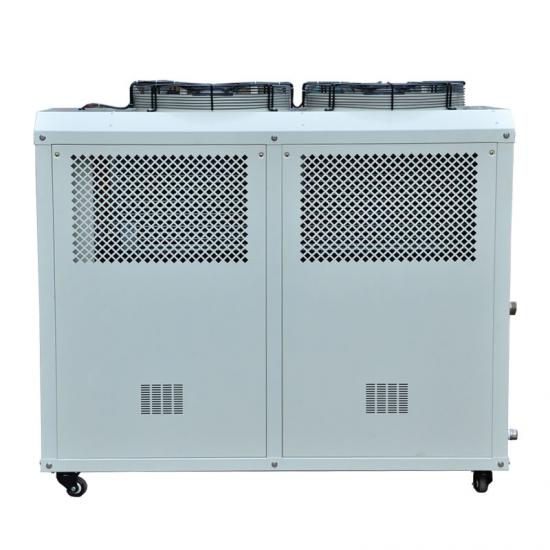
You should select a 10 hp water cooled chiller when your shop handles high-volume metal finishing or operates in a region with stable water supply. Liquid cooled systems excel in environments where precise temperature control and consistent cooling are essential. If you run processes like anodizing or plating that demand tight thermal management, you gain superior results with liquid cooled technology. You also benefit from lower energy costs over time because water transfers heat efficiently. Large facilities with robust infrastructure often rely on liquid cooled chillers to maximize power and minimize downtime. You see these systems in shops where product quality and process reliability matter most.
You should consider air cooled chillers if your facility has limited space or faces water restrictions. Air cooled units offer quick installation and flexible placement. You can use them outdoors, which frees up indoor workspace. Air cooling works well in moderate climates and smaller shops. If you need a straightforward solution with minimal setup, air cooled chillers deliver reliable performance. You also avoid ongoing water costs and complex maintenance. Many shop owners appreciate the simplicity and durability of air cooled motorcycle style systems. You find air cooled technology ideal for operations where rapid deployment and cost control are priorities.
A large plating facility with steady water access chooses a 10 hp water cooled chiller for its liquid cooled efficiency and stable power output. The shop achieves consistent finishes and reduces energy costs.
A small anodizing shop in a dry region installs an air cooled chiller. The owner values air cooling for its easy setup and avoids water-related costs.
A medium-sized operation with mixed processes selects the OUMAL 10 HP Air to Water Cooled Metal Finishing Chiller. You benefit from its compact design, versatile cooling modes, and advanced safety features. The OUMAL chiller adapts to both liquid cooled and air cooled needs, making it a smart choice for shops seeking flexibility.
Tip: Match your chiller to your shop’s workflow, climate, and infrastructure. You optimize cooling performance and manage costs effectively.
You face a choice between 10 hp water cooled and air cooled chillers for metal finishing. Water cooled models suit large shops with high cooling demands, while air cooled units fit smaller spaces and quick setups. Consider your shop size, budget, climate, and operational needs:
| Checklist Item | Description |
| Shop Size & Budget | Match chiller type to facility scale and available funds |
| Climate & Location | Choose based on ambient temperature and installation space |
| Maintenance & Operation | Plan for routine checks and efficient operation |
| Cooling Requirements | Assess heat load and process needs for your 10 hp system |
FAQ
What is the main advantage of a water cooled chiller for metal finishing?
You get superior cooling efficiency and stable temperature control. Water cooled chillers handle high heat loads and support large-scale operations. You achieve consistent product quality, especially in demanding metal finishing environments.
Can I install an air cooled chiller outdoors?
Yes, you can place air cooled chillers outdoors. You save indoor space and simplify installation. Just ensure proper airflow around the unit for optimal performance.
How does the OUMAL 10 HP chiller improve process reliability?
The OUMAL chiller features advanced safety protections and precise temperature control. You reduce downtime and protect your equipment. The micro-computer control panel lets you monitor and adjust settings easily.
What maintenance tasks should I perform regularly?



Friendly Links :
www.dyyseo.com en
en es
es