

Categories
New Blog
When operating an industrial water chiller, two temperature readings often appear on the controller: the chiller setpoint and the leaving water temperature. Although these values are closely related, they do not mean exactly the same thing. Understanding the difference is important for maintaining stable cooling performance, protecting production equipment, and avoiding unnecessary energy consumption.
The main difference is simple: the chiller setpoint is the target temperature entered into the control system, while the leaving water temperature (LWT) is the actual temperature of the chilled water as it exits the chiller evaporator.
For industrial cooling applications, understanding how these two values interact helps operators identify temperature deviations, adjust operating parameters, and select the right cooling equipment. This guide explains their definitions, differences, practical examples, and the factors that affect temperature control.
A chiller setpoint is the target water temperature configured by the operator or control system. It tells the chiller what temperature the system should aim to maintain during operation.
For example, if an industrial chiller is set to 7°C, the controller uses this value as its temperature control target. Based on the actual operating conditions, the controller adjusts compressor capacity, refrigeration output, or other control components to bring the chilled water temperature toward the selected value.
The setpoint is not necessarily the temperature that the system maintains at every moment. During startup, sudden changes in cooling demand, or periods of heavy production, the actual water temperature may temporarily move above or below the target.
In industrial applications, the appropriate setpoint depends on several factors:
For instance, a plastic injection molding process may require a different chilled water temperature from a chemical production line or food processing system. Therefore, the setpoint should always be selected according to the actual application rather than using one standard temperature for every industrial process.
Leaving water temperature, commonly abbreviated as LWT, refers to the actual temperature of the chilled water leaving the chiller evaporator and flowing toward the cooling application.
After absorbing heat from production equipment, the warmer return water flows back to the chiller. Inside the evaporator, heat is transferred from the water to the refrigerant. The cooled water then leaves the evaporator and circulates back to the equipment.
This means that leaving water temperature is an actual operating measurement rather than simply a target entered into the controller.
For example, if the chiller setpoint is 7°C and the leaving water temperature sensor reads 7.3°C, the actual outlet water temperature is currently 7.3°C. The controller may continue adjusting the refrigeration capacity to bring the temperature closer to the target, depending on its control logic and deadband.
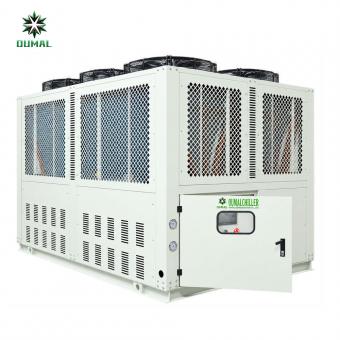
For industrial cooling systems, monitoring leaving water temperature is particularly important because it directly reflects the cooling water supplied to the process. If the outlet temperature becomes unstable, production equipment may experience inconsistent cooling, which can affect product quality and operating efficiency.
Although both values are expressed in degrees Celsius or Fahrenheit, they serve different purposes in a chiller control system.
| Comparison | Chiller Setpoint | Leaving Water Temperature |
|---|---|---|
| Definition | Target temperature configured in the controller | Actual chilled water temperature leaving the evaporator |
| Main function | Provides the temperature control target | Shows the actual cooling water supply temperature |
| How it changes | Changed through controller settings or control commands | Changes with cooling load and operating conditions |
| Measurement | A programmed target value | Measured by a temperature sensor |
| Typical use | Setting the desired cooling temperature | Monitoring actual chiller performance |
In short, the setpoint tells the chiller where the temperature should be, while the leaving water temperature tells the operator what the system is actually delivering. Both values should be monitored together to evaluate cooling performance.
An industrial chiller uses a temperature control system to compare the measured leaving water temperature with the programmed setpoint. Based on the difference between these values, the controller determines whether additional cooling capacity is required.
The general operating process includes the following steps:
Different chillers use different control methods. Some systems rely on compressor on/off control, while larger industrial units may use multi-stage capacity control, variable-frequency compressors, or PLC-based temperature regulation.

For applications requiring continuous operation and precise temperature management, a properly configured water-cooled screw chiller can provide reliable cooling capacity and intelligent control. OUMAL offers industrial chiller configurations with Siemens PLC control systems to support different industrial cooling requirements.
Consider an industrial facility operating a water chiller with the following settings:
| Chiller setpoint | 7°C |
| Actual leaving water temperature | 9°C |
| Return water temperature | 12°C |
In this example, the chiller is targeting 7°C, but the actual outlet water temperature is 9°C. The 2°C difference indicates that the chiller has not yet reached its target temperature at the time of measurement.
The return water temperature is 12°C, meaning the water has gained heat while circulating through the production equipment. The 3°C difference between return and leaving water temperatures represents the water-side temperature difference across the cooling circuit, assuming the measurements are taken at the corresponding system boundaries.
This situation does not automatically indicate equipment failure. It may occur during startup, when the process cooling load increases, or when the chiller is operating at its capacity limit.
However, if the leaving water temperature remains significantly higher than the setpoint during stable operation, the operator should investigate the cause instead of simply lowering the setpoint.
There are several reasons why an industrial chiller may struggle to achieve its target temperature. Identifying the underlying cause is important for restoring stable cooling performance.
Excessive cooling load
If production equipment generates more heat than the chiller is designed to remove, the leaving water temperature may rise above the setpoint. This commonly happens when additional machines are connected to an existing cooling system or when production demand increases.
Insufficient chiller capacity
A chiller that is undersized for the actual application may operate continuously without reaching the required water temperature. Cooling capacity should be selected based on the process heat load, operating conditions, and required temperature range.
Insufficient water flow
Low water flow can reduce heat transfer performance and cause temperature fluctuations. Blocked filters, incorrectly sized pipes, air in the water circuit, or pump problems may contribute to this issue.
Heat exchanger contamination
Scale, dirt, or other deposits inside the evaporator can reduce heat transfer efficiency. Regular inspection and maintenance help prevent this problem from affecting cooling performance.
High ambient temperature or poor ventilation
For an air-cooled chiller, high outdoor temperatures and restricted airflow around the condenser can reduce heat rejection efficiency. Proper equipment placement and ventilation are important for maintaining stable operation.
For facilities using outdoor cooling equipment, selecting a suitable industrial air-cooled chiller requires considering both the required cooling capacity and the expected ambient temperature.
No. Setting a lower chiller temperature does not necessarily improve the overall cooling performance of a production system.
A lower setpoint increases the temperature difference between the chilled water and the surrounding process, but it may also increase compressor workload and energy consumption. Depending on the equipment design, it can reduce operating efficiency and increase the risk of freezing or condensation-related problems.
For example, if a production process requires 10°C chilled water, setting the chiller to 5°C may provide no meaningful production benefit. It may simply cause the chiller to consume more energy to produce colder water than the application actually needs.
Before changing the setpoint, operators should confirm:
For applications that require temperatures below the normal chilled water range, a dedicated low-temperature chiller or glycol cooling system may be more appropriate than simply lowering the setpoint of a standard water chiller.
Choosing a suitable industrial chiller involves more than checking its nominal cooling capacity. The equipment must also maintain the required leaving water temperature under actual operating conditions.
When evaluating a chiller for an industrial application, consider the following factors:
For larger manufacturing facilities with continuous cooling requirements, a complete industrial chiller system should be selected according to the actual process requirements rather than cooling capacity alone.
OUMAL provides industrial air-cooled chillers, water-cooled chillers, screw chillers, glycol chillers, and customized cooling solutions for industries such as plastics processing, chemical manufacturing, food production, and metal finishing. The appropriate configuration depends on the required outlet temperature, cooling load, and site conditions.
Is the chiller setpoint the same as leaving water temperature?
No. The chiller setpoint is the target temperature programmed into the control system, while leaving water temperature is the actual temperature measured as chilled water exits the evaporator. The two values may differ temporarily during operation.
Should leaving water temperature always match the setpoint?
Not necessarily at every moment. During startup, changing cooling loads, or normal control adjustments, the actual leaving water temperature may fluctuate around the target. Under stable operating conditions, it should generally remain within the specified control tolerance.
What is the difference between leaving water temperature and return water temperature?
Leaving water temperature is the temperature of the chilled water supplied from the chiller to the process. Return water temperature is the temperature of the water coming back after absorbing heat from the equipment. The difference between these readings is commonly called the chilled water temperature difference or Delta T.
Why does my chiller show a higher leaving water temperature than the setpoint?
Possible causes include excessive cooling demand, insufficient chiller capacity, restricted water flow, dirty heat exchangers, high ambient temperatures, or control and sensor problems. The actual operating conditions should be checked before changing the setpoint.
What is a normal leaving water temperature for an industrial chiller?
There is no single temperature suitable for every industrial application. Many conventional industrial water chillers operate with leaving water temperatures around 5°C to 25°C, while specialized low-temperature chillers can provide colder outlet temperatures. The correct range depends on the process, chiller design, and cooling medium.
Can I lower the chiller setpoint to compensate for insufficient cooling?
It is not recommended as the first solution. If the chiller cannot meet the existing target, lowering the setpoint may increase energy consumption without resolving the underlying problem. Check cooling load, water flow, heat exchanger condition, and available capacity first.
Understanding the difference between chiller setpoint and leaving water temperature helps operators monitor system performance more accurately and make better decisions about temperature control.
The setpoint defines the target, while leaving water temperature reflects the actual cooling water supplied to the process. Monitoring both values, together with return water temperature and system operating conditions, provides a clearer picture of chiller performance.
OUMAL specializes in industrial water chillers and customized cooling systems for different manufacturing applications. Whether you need an air-cooled chiller, water-cooled screw chiller, or low-temperature glycol cooling solution, selecting equipment according to your actual cooling load and required outlet temperature is essential.
If you are planning a new industrial cooling system or looking to improve the temperature stability of an existing process, contact OUMAL to discuss your cooling requirements and find a suitable chiller solution.



Friendly Links :
www.dyyseo.com en
 es