
Categories
You achieve heavy-duty, continuous operation in industrial air cooled screw chillers by focusing on three key strategies:
Select robust designs that withstand demanding environments.
Size your chiller correctly to match your facility’s cooling needs.
Schedule proactive maintenance to prevent unexpected breakdowns.
Reliability starts with minimizing downtime. You monitor performance, address issues quickly, and keep spare parts ready.
Choose robust designs for air cooled chillers to ensure they withstand demanding industrial environments.
Implement a regular maintenance schedule to catch small issues before they lead to costly downtime.
Utilize advanced controls and automation for real-time monitoring and adjustments to improve chiller efficiency.
Incorporate redundancy and backup systems to protect against unexpected failures and maintain continuous operation.
Consider upgrades like inverter integration to enhance efficiency and extend the lifespan of your chiller.
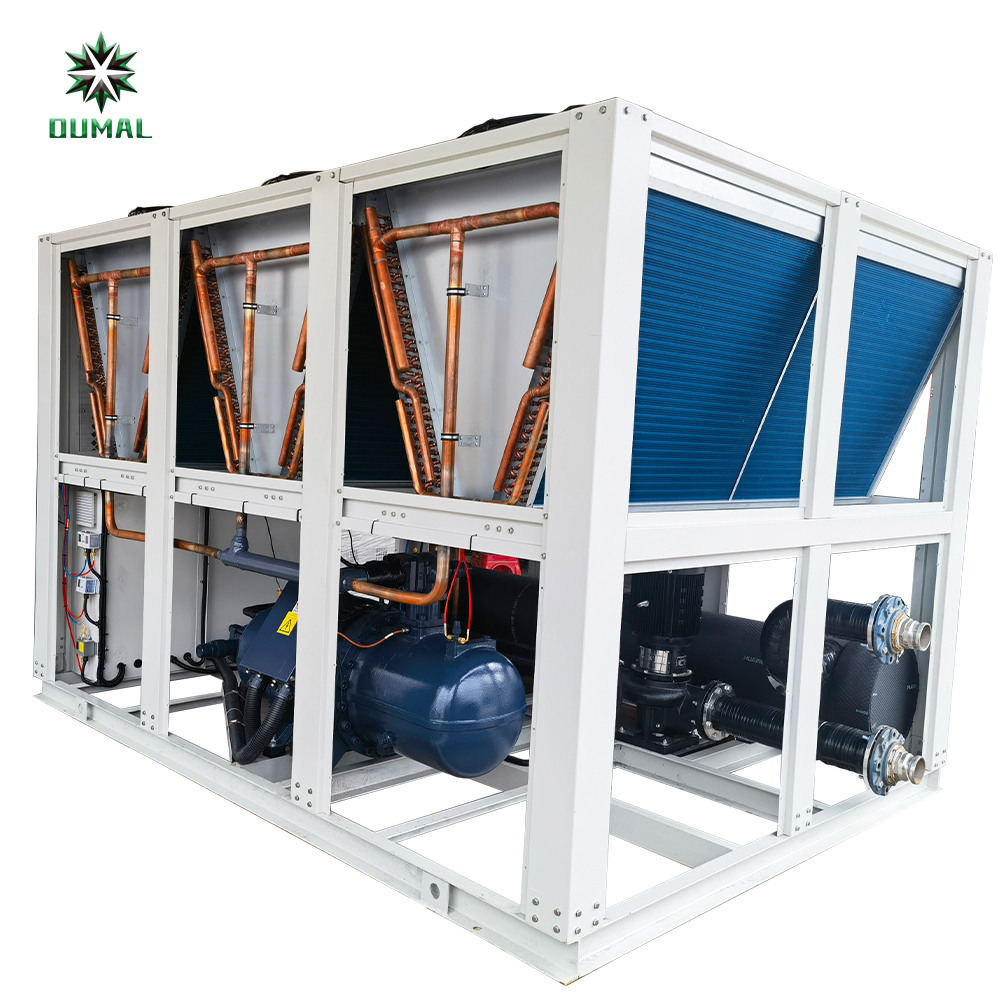
You need to choose equipment that can handle the toughest industrial demands. A heavy-duty air cooled chiller uses a reinforced screw compressor. This type of compressor delivers reliable performance even when you run it around the clock. The screw compressor resists wear and tear because it has strong internal components and high-quality bearings. You also benefit from larger, more robust heat exchangers. These heat exchangers transfer heat efficiently and withstand harsh operating conditions. When you select a heavy-duty chiller, you get a system built with thicker tubing, durable frames, and corrosion-resistant materials. This construction helps you avoid unexpected failures and keeps your operation running smoothly.
Tip: Always check the specifications for compressor strength and heat exchanger size before you make a purchase.
You improve reliability when you use advanced controls and automation. Modern heavy-duty chillers come with smart controllers that monitor temperature, pressure, and flow rates in real time. These systems adjust operation automatically to match your cooling needs. You can set alarms for abnormal conditions, so you catch problems early. Some controllers let you connect to building management systems for remote monitoring. This feature gives you instant access to performance data and helps you make quick decisions. Automation reduces human error and ensures your chiller operates at peak efficiency.
Benefits of advanced controls:
Real-time monitoring
Automatic adjustments
Early warning alarms
Remote access
You protect your process from downtime by adding redundancy and backup systems. A heavy-duty chiller often includes dual pumps, extra fans, or parallel compressors. If one component fails, the backup takes over without stopping the cooling process. You can also install emergency power supplies to keep the chiller running during outages. Redundant design means you avoid costly interruptions and maintain product quality. You should test backup systems regularly to ensure they work when you need them most.
Note: Redundancy is not just an option for mission-critical applications. It is a best practice for any facility that values continuous operation.
Proper maintenance keeps your air cooled chillers running at peak performance and helps you avoid costly downtime. You need to follow a structured approach that includes preventive routines, regular cleaning, and smart monitoring. By planning ahead, you protect your cooling capacity and extend the life of your equipment.
You should never overlook preventive maintenance. It forms the backbone of reliable operation for air cooled chillers. When you stick to a schedule, you catch small issues before they become big problems. Here is a table that shows industry-recommended intervals and activities for chillers operating under continuous load:
|
Maintenance Frequency |
Maintenance Activities |
|---|---|
|
Daily/Weekly |
Monitor operating conditions, inspect refrigerant levels, check for leaks. |
|
Monthly/Quarterly |
Clean filters, conduct tests on control devices, inspect mechanical components. |
|
Annual |
Deep clean components, evaluate system performance, replace worn parts. |
Preventive maintenance not only reduces these costs but ensures longer equipment life and fewer production disruptions.
You save time and money by preventing damage before it happens. Regular inspections help you spot problems early. You can make repairs before they affect your cooling capacity or cause a drop in performance.
Regular chiller maintenance benefits your company in the following ways:
Time and money savings: While scheduling or performing regular maintenance may seem like a significant expense or time-consuming task, it can save you time and money. Regular chiller maintenance helps prevent damage, helping your company save on future repairs. While routine maintenance can’t eliminate all risks, it can significantly reduce potential damage.
Machine longevity: As proper maintenance reduces damage, it also increases your machine’s longevity. A chiller’s life span is typically longer when a company maintains it and makes repairs when necessary. Regular inspections enable you to identify chiller problems and solutions early. You’ll be able to make repairs before the damage worsens or affects other machine components, helping the system last longer.
You need to keep your air cooled chillers clean to maintain high performance. Dust and debris can clog condenser filters and reduce cooling capacity. You should clean filters and coils on a regular basis. This simple step helps your chiller transfer heat efficiently and prevents overheating.
Set up a routine to monitor alarms and system indicators. Modern chillers come with sensors that alert you to abnormal conditions. When you respond quickly to these alarms, you avoid bigger problems and keep your cooling capacity stable. Always check for leaks, unusual noises, or changes in temperature. These signs often point to issues that need immediate attention.
Checklist for daily monitoring:
Inspect refrigerant levels
Listen for unusual sounds
Check temperature and pressure readings
Review alarm logs
By following these steps, you ensure your air cooled screw chillers deliver consistent performance every day.
You can minimize downtime by keeping critical spare parts in stock. Air cooled chillers run continuously, so some components wear out faster than others. If you wait to order parts after a failure, you risk long repair cycles and production delays. The average repair cycle for core components is 7-10 days, but it can take longer if parts are not available. You should always stock frequently used parts in advance to speed up repairs and replacements.
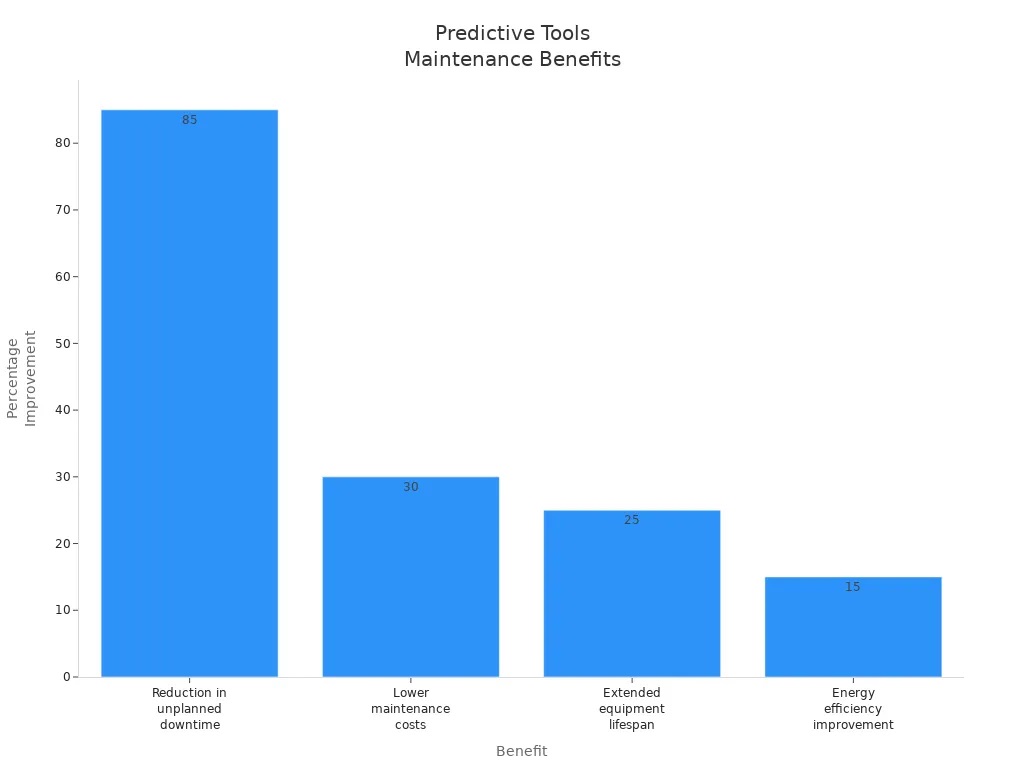
Predictive diagnostics take your maintenance program to the next level. These tools use sensors and data analytics to predict failures before they happen. You get alerts about declining performance or potential breakdowns. This allows you to plan repairs during scheduled downtime, not during a crisis.
Here is a table showing how predictive diagnostics improve maintenance outcomes for air cooled chillers:
|
Benefit |
Percentage Improvement |
|---|---|
|
Reduction in unplanned downtime |
85% |
|
Lower maintenance costs |
30% |
|
Extended equipment lifespan |
25% |
|
Energy efficiency improvement |
15% |
Tip: Predictive diagnostics help you avoid surprises and keep your air cooled chillers operating at their best. You protect your cooling capacity and get more value from your investment.
By combining preventive routines, regular cleaning, and predictive diagnostics, you ensure your industrial air cooled chillers deliver reliable performance and maximum cooling capacity year-round.
You need to start each day with a thorough inspection of your chiller system. Daily checks help you catch small issues before they become major problems. Focus on the following tasks:
Check leaving and entering water temperature to confirm proper cooling.
Verify that the flow rate stays within the design range.
Look for alarms or fault codes on the control panel.
Inspect for water or refrigerant leaks around the unit.
Listen for abnormal noises from the pump, compressor, or fans.
You should also record key operating data. Tracking temperatures, pressures, fluid levels, flow rates, and motor amperage helps you spot trends and identify deviations early. The table below shows why each metric matters:
|
Metric |
Importance |
|---|---|
|
Temperatures |
Identifies deviations from normal |
|
Fluid levels |
Ensures adequate operation and prevents issues |
|
Pressures |
Indicates system efficiency and potential faults |
|
Flow rates |
Essential for optimal chiller performance |
|
Motor amperage |
Monitors electrical consumption and performance |
Tip: Consistent daily logs make it easier to maintain reliable cooling and prevent unexpected downtime.
You maximize chiller reliability by matching cooling output to your facility’s demand. Advanced control systems adjust chiller operation in real time, ensuring you never waste energy or overwork your equipment. Variable speed drives allow your chiller to run efficiently at partial loads, which is common in most industrial settings. Capacity modulation technologies help you deliver the exact amount of cooling needed at any moment.
You should monitor performance data regularly. Predictive maintenance strategies use this data to identify potential issues before they disrupt your cooling process. When you keep your system tuned to actual demand, you extend equipment life and maintain stable cooling for your operations.
Use advanced controls for real-time adjustments.
Install variable speed drives for efficient partial load operation.
Apply capacity modulation to match cooling output to demand.
Rely on predictive maintenance to catch problems early.
You need a clear troubleshooting protocol to minimize downtime and protect your cooling process. Follow these steps for effective problem-solving:
Monitor operating pressures, temperatures, and system indicators every day.
Inspect electrical connections and lubricate moving parts each month.
Check refrigerant levels, safety controls, and perform leak detection quarterly or annually.
Common issues include clogged condenser coils, fan motor failure, and refrigerant leaks. You can often detect these problems through low-pressure readings or abnormal system behavior. Keep your system clean and treat condenser water to limit corrosion and buildup. When you respond quickly to alarms or unusual readings, you maintain reliable cooling and avoid costly interruptions.
Note: Fast action and routine troubleshooting keep your cooling system dependable and efficient.
You may notice that overheating is one of the most frequent problems in air cooled screw chillers, especially during continuous operation. Overheating can damage the compressor and reduce system efficiency. The table below shows the main causes and their effects:
|
Cause |
Effect |
|---|---|
|
High-pressure faults |
Excessive compressor current, risk of motor burnout and equipment damage |
|
Excessive refrigerant charge |
Elevated pressures, high compressor current |
|
High cooling water temperature |
Poor condensation, increased condensing pressure, high-pressure faults |
|
Contaminated condenser fins |
Poor heat dissipation, higher discharge temperature, increased compressor load |
|
Fan stoppage |
Higher compressor load, increased oil temperature, risk of overheating |
|
Impaired heat dissipation |
Higher winding and oil temperatures, faster bearing wear |
|
Insufficient oil |
Disturbed heat balance, overheating, possible failure |
Load fluctuations also challenge chiller stability. You can rely on screw chillers to adjust their cooling capacity as demand changes. Features like slide valve adjustment and variable frequency drives help manage energy use and keep the system stable. Fewer moving parts in screw chillers mean less mechanical wear and vibration, even when loads shift quickly.
You should watch for electrical and mechanical failures, as these are leading causes of downtime. Refrigerant leaks account for about 25–30% of all service calls and often lead to compressor failure if not detected early. Fouled condensers can trigger high-pressure safety trips and increase energy use. Electrical issues, such as sensor drift, cause about 20% of unplanned shutdowns and can be hard to diagnose.
To reduce these risks, follow these preventive measures:
Inspect and clean condenser coils regularly.
Monitor refrigerant levels and check for leaks.
Maintain proper water treatment to prevent scale and corrosion.
Check electrical components and connections.
Schedule annual professional service for a thorough inspection.
Tip: Regular maintenance helps you catch problems early and keeps your chiller running reliably.
You must consider environmental factors like ambient temperature and air quality. High outdoor temperatures or poor air quality can lower chiller performance. Modern chillers use technologies such as Variable Frequency Drives (VFD) and Variable Volume Ratio (VVR) to adapt to changing conditions and maintain efficiency.
Different industries face unique challenges. In manufacturing, you need precise temperature control to protect equipment and ensure product quality. In food processing and plastics, chillers help maintain safe product temperatures and are easy to integrate into existing systems. Reliable cooling and robust controls are essential for preventing damage and maintaining steady operation across all applications.
You can boost the efficiency of your screw compressor by integrating an inverter. Inverter technology gives you variable speed control, which lets your refrigeration system adjust compressor speed to match cooling demand. This approach reduces energy waste and keeps your system running smoothly at all load levels. When you use a permanent magnet synchronous motor with a frequency inverter, you lower motor current and cut energy consumption compared to traditional motors.
Variable frequency operation allows precise pressure regulation and stable air supply pressure. This minimizes energy use by reducing pressure swings.
The compressor can adjust its output to match capacity needs, so you avoid unnecessary energy use during low load periods.
Inverter integration enables your chiller to operate at speeds from 1750 RPM to 8000 RPM. This wide range improves control and power savings, especially at part load.
Efficiency improvements from inverter integration range from 5% to 70% over standard screw compressors. You also gain better part-load efficiency, which is important for most industrial applications.
You can modernize your aging refrigeration system with targeted retrofits. Well-planned upgrades can improve efficiency by 15% to 40%. Common retrofitting options include installing variable speed drives, upgrading control systems, and converting to environmentally friendly refrigerants. These changes help you meet new efficiency standards and reduce operational costs.
The global market for chiller retrofits is growing fast. Rising energy costs and stricter environmental rules drive this trend. Many older chillers operate at much lower efficiency than modern units. For example, legacy chillers often have a coefficient of performance (COP) between 2.5 and 4.0, while new high-efficiency models reach COP values above 6.0. This gap means you could save a lot of energy and money by upgrading. Most retrofits pay for themselves in two to five years, making them a smart investment.
You can extend the life of your screw compressor and maximize efficiency by focusing on durability. Choose high-quality components and materials that resist wear and corrosion. Regularly inspect and maintain your refrigeration system to prevent breakdowns and keep capacity stable. Advanced controls and predictive diagnostics help you spot issues early, so you can fix them before they affect performance.
Use robust construction for all screw compressors to handle continuous operation.
Monitor system data to ensure capacity matches demand and avoid overworking the compressor.
Upgrade insulation and optimize airflow to reduce energy loss and improve efficiency.
By combining inverter integration, modernization, and a focus on durability, you ensure your screw refrigeration system delivers reliable capacity and top efficiency for years.
You achieve heavy-duty, continuous operation in air cooled screw chillers by focusing on robust design, regular maintenance, and operational discipline. Upgrades like integrated dryers, electronic condensate management, direct drive systems, and variable speed drives deliver long-term reliability and reduce costs. Sealing, rotor, and bearing improvements further enhance performance. You protect your investment and ensure consistent cooling by implementing best practices and considering efficiency upgrades.
You choose air cooled chillers for industrial operations because they offer reliable cooling solutions. These chillers handle harsh environments and deliver consistent cooling. You benefit from easy installation and low maintenance. Air cooled chillers work well in industrial complexes where water access is limited.
You maintain continuous operation by following strict maintenance routines. You monitor your chiller daily and respond quickly to alarms. You keep spare parts ready and use predictive diagnostics. Air cooled screw chiller systems require regular cleaning and performance checks to support industrial process cooling.
You save energy and reduce costs when you focus on energy efficiency. Air cooled chillers with advanced controls use less energy during partial loads. You lower your environmental impact and extend equipment life. Efficient chillers help you meet sustainability goals in industrial settings.
You clean condenser coils, check refrigerant levels, and inspect electrical connections. You monitor system pressures and temperatures. You schedule preventive maintenance for your chiller. These tasks keep your air cooled chillers running smoothly and prevent unexpected downtime in industrial applications.
You rely on air cooled chillers for large industrial complexes because they deliver powerful cooling. These chillers scale easily and adapt to changing loads. You get flexibility for different cooling needs. Air cooled chillers provide reliable cooling solutions for demanding industrial environments.



Friendly Links :
www.dyyseo.com en
en es
es