

Categories
You must evaluate key technical specifications before procuring an industrial low temperature screw chiller for your plant. You need to verify the leaving fluid temperature down to -3°C or lower. You must also inspect the heat exchanger architecture and refrigerant selection. Plant engineers and procurement managers must prioritize precise capacity control.
Dual semi-hermetic screw compressors maintain uninterrupted cooling stability during dynamic operational shifts. This machinery handles heavy load variations while optimizing overall power consumption. Selecting the correct secondary chiller guarantees continuous operational reliability and prevents process downtime. You protect plant infrastructure by verifying every critical performance metric before final equipment procurement.
Check your facility leaving fluid temperature requirements down to sub-zero levels before buying a chiller.
Choose dual semi-hermetic screw compressors with step-less slide valves to save energy during light work shifts.
Select water-cooled chillers over air-cooled units to maintain steady cooling performance in hot climates.
Verify electronic expansion valves and SCADA system safeguards to prevent costly machine freezes and breakdowns.
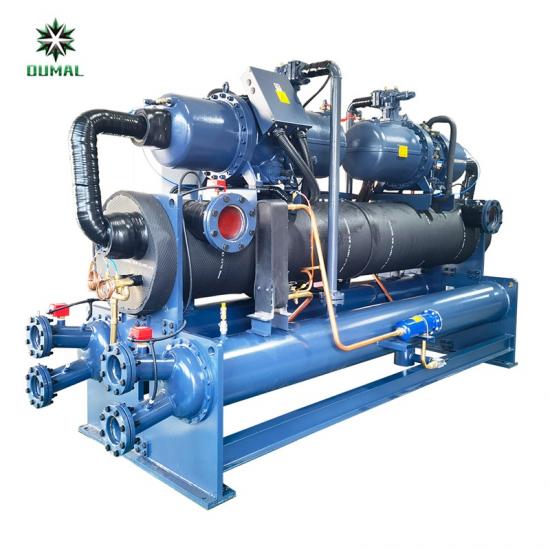
You must start your thermal evaluation by measuring total heat gain across your industrial facility. A precise cooling load calculation determines the required nominal cooling capacity of over 500 kW for heavy operations. You need to verify every thermal load variable before selecting hardware. Plant engineers must define the exact leaving fluid temperature for their process fluid. A standard commercial chiller system often fails under severe sub-zero thermal stress. An industrial low temperature screw chiller operates within a temperature range of -40°C to 5°C. Specialized ultra-low units in chemical processing and pharmaceutical manufacturing operate in the range of -40°C to -60°C. You must match operational ratings directly to peak process demands to prevent equipment overload.
Lowering the leaving fluid temperature directly affects overall system efficiency. A decrease in the required leaving fluid temperature forces the refrigerant to boil at a lower temperature. This pressure drop increases compressor work significantly during daily operation. Every 1–2°C drop in boiling temperature results in a 1.5–3% loss in efficiency. Screw machines are particularly sensitive to large temperature differentials up to 70–80°C that occur in sub-zero conditions. This extreme thermal differential further degrades equipment output. You must account for this performance penalty when sizing your primary chiller. Fluctuations in process thermal load require dynamic equipment response. Selecting an undersized chiller leads to severe process instability during peak load hours. Proper thermal sizing eliminates continuous strain on mechanical components.
Ambient operating conditions dramatically alter industrial chillers performance across different seasonal environments. You should carefully analyze local weather data before selecting system specifications. Air-cooled chillers exhibit a drop in cooling output as ambient temperature rises, which negatively impacts their energy efficiency ratio. In contrast, water-cooled chillers maintain stable performance regardless of ambient temperature. You must evaluate how changing site conditions dictate full-load and part-load operational demands. Proper site evaluation ensures long-term operational success for every mechanical chiller in your plant.
|
Ambient Temperature |
Load |
EER |
|---|---|---|
|
35°C |
100% |
~3 |
|
15°C |
50% |
~7 |
As ambient temperature drops from 35°C to 15°C and load reduces from 100% to 50%, the energy efficiency ratio more than doubles from approximately 3 to 7. Extreme ambient temperature fluctuations directly improve the energy efficiency ratio of air-cooled chillers. Standard process chillers must adapt to fluctuating operational loads. However, water-cooled setups provide consistent capacity control for heavy industrial operations year-round. A reliable setup effectively manages varying thermal load conditions across every operational shift. This baseline consistency protects your secondary chiller against thermal fatigue.
You must evaluate facility infrastructure before installing a heavy commercial chiller system. High ambient outdoor heat reduces total cooling power in unmitigated environments compared to traditional air-cooled chillers operating in hot climates. A water-cooled industrial low temperature screw chiller delivers steady output down to -3°C leaving fluid temperature without suffering from severe heat spikes. You can integrate a process chiller into your line to maintain strict thermal tolerances. This stability protects sensitive product formulations in chemical and food plants. Careful engineering and selecting the right chiller prevents downtime and guarantees continuous process cooling without interruption.
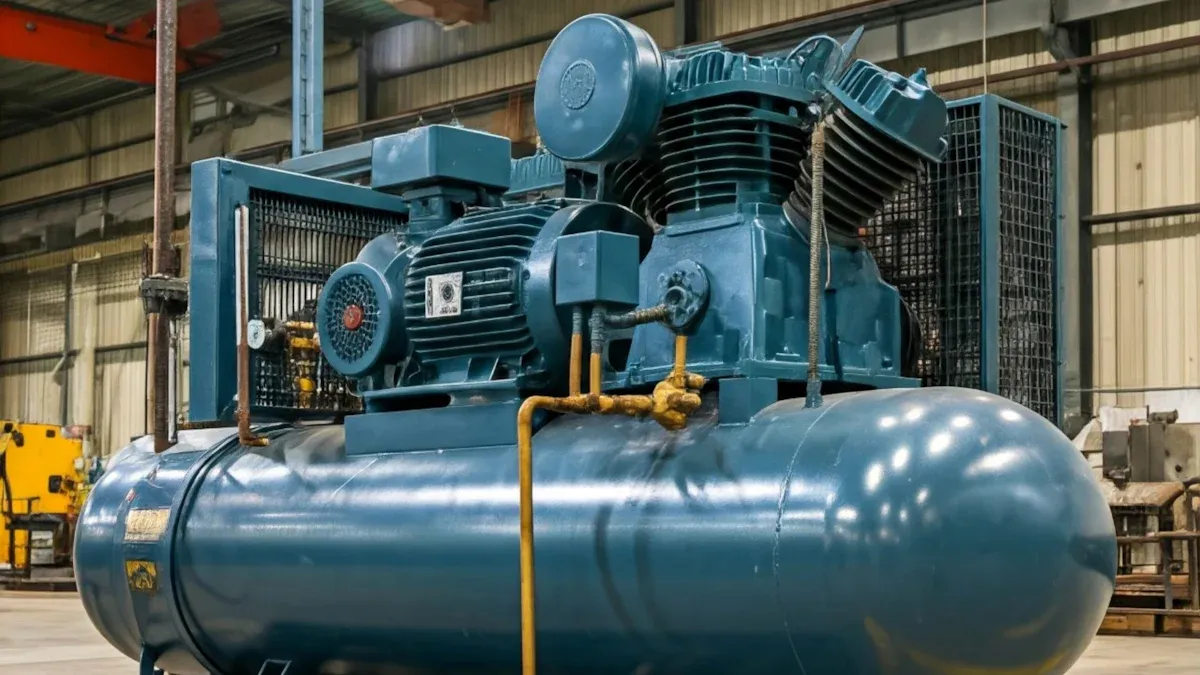
You need robust mechanical components to handle heavy sub-zero thermal loads. Semi-hermetic dual screw compressors deliver steady rotational force with low mechanical vibration. Electrical spikes during system startup can disrupt plant equipment and strain power lines. An industrial screw chiller protects electrical system integrity by using star-delta (Y-Δ) start-up modes to control initial electrical draw.
This limits the starting current to approximately 33% of the full-load current, making it ideal for avoiding electrical surges.
This significant drop in electrical inrush current protects your electrical grid from severe voltage dips. Lowering start-up current reduces line disturbance across your facility infrastructure. You stabilize plant power distribution while protecting internal motor windings from electrical heat stress. Dual twin-screw compressors divide total mechanical work across two separate drive shafts. Dual circuits maintain high mechanical efficiency during long operating hours. Plant operators rely on twin-screw efficiency to maintain continuous fluid cooling during severe production cycles. Heavy-duty industrial screw units protect factory throughput during peak production hours.
Modern process cooling systems demand dynamic thermal regulation across variable operating shifts. Internal slide valves enable precise step-less capacity control within each screw unit. You can adjust system capacity across 0-25-50-75-100% load steps dynamically. The system controller matches thermal process demand with exact compressor output. You prevent unnecessary electrical loss by adjusting refrigerant flow directly inside the compression chamber. Precise throttling reduces overall energy draw during extended low-demand periods. Each secondary chiller delivers dynamic power adjustment for fluctuating process demands.
Industrial manufacturing lines rarely require continuous peak load output throughout daily operation. Plant processes experience shifting ambient temperatures, changing batch volumes, and scheduled maintenance pauses. High-capacity chillers must alter total output without stopping mechanical operation completely. Air-cooled and water-cooled chillers handle varying plant conditions through effective part load staging. A primary process chiller maintains stable fluid temperatures across fluctuating operational schedules. A dual-circuit screw chiller manages changing thermal conditions by operating separate refrigeration loops independently. Running one unit under full load while shutting down the second compressor saves massive amounts of electrical energy.
Compressors achieve smooth capacity modulation from 10-100% via slide valve unloading. VSD-equipped compressors avoid energy waste from hot-gas bypass or slide-valve unloading at low loads. This engineering approach increases partial load efficiency during extended part load operations. You increase overall energy efficiency during light production shifts without sacrificing system responsiveness. Efficient modulation helps modern industrial chillers protect delicate chemical and pharmaceutical formulations.
Smooth capacity modulation provides concrete mechanical and operational benefits:
Reduced compressor cycling
Stable evaporating and condensing pressures
Reduced compressor wear
Lower inrush current
Improved IPLV/NPLV
Maintaining stable evaporating pressure protects process fluid from freezing inside the evaporator barrel. Frequent mechanical cycling wastes electrical energy and accelerates rotor wear. Steady mechanical operation saves power while extending mechanical component life. You optimize overall system efficiency during low-demand periods while preserving full system capacity for peak thermal load demand. Matching energy consumption to real-time process demand reduces operational expenses across your entire cooling infrastructure. Industrial low-temperature chillers ensure smooth thermal stability across every manufacturing cycle. Selecting a high-capacity industrial screw chiller ensures long-term process reliability under demanding thermal conditions. Proper machine sizing prevents operational bottlenecks while lowering overall plant utility expenses. You secure continuous low-temperature fluid management through proven compressor modulation technology.
You must select robust heat exchangers for secondary fluid thermal exchange in sub-zero applications. High-efficiency shell-and-tube evaporators handle fluid viscosity changes better than brazed plate designs. Heavy shell-and-tube evaporators optimize thermal transfer while resisting internal contamination. You prevent severe pressure drops in your process loop using a specialized chiller. A backup chiller protects fluid flow during peak operational shifts. Plant operators rely on a single chiller to maintain target temperatures.
Heat exchanger architecture determines overall thermal exchange performance:
Shell-and-tube heat exchangers: 200–1,000 W/m²·K
Plate heat exchangers (including brazed plate): 3,000–7,000 W/m²·K
Despite lower heat transfer rates, shell-and-tube units provide high mechanical durability. This specialized heat exchanger setup increases system efficiency and maintains process cooling stability.
You must evaluate facility infrastructure before choosing between water-cooled chillers and air cooled chillers. You can learn how air cooled chillers work by analyzing fan assemblies and condenser coils. Different types of air cooled chillers serve outdoor spaces across an industrial plant. Analyzing the functionality of air-cooled chillers helps engineers evaluate thermal discharge options effectively. The applications and benefits of air cooled chillers include simple outdoor installation and lower upfront piping costs. However, air cooled chillers consume more energy in hot climates than water-cooled options. Standard air cooled chillers also generate high ambient noise levels. Consequently, air cooled chillers require substantial outdoor space. Procurement teams often prefer water-cooled chillers for indoor spaces. Water-cooled chillers deliver quiet performance. High-capacity water-cooled chillers optimize heat rejection. Centralized chillers utilize cooling towers to manage heavy loads. Modern plant chillers maintain stable process fluid cooling performance.
A water-cooled commercial chiller system operates at lower condensing pressures than outdoor units. Lower condensing pressures conserve energy during continuous production cycles, which reduces energy losses significantly. Water-cooled chiller systems deliver quiet cooling in noise-sensitive facilities. You can connect a water-cooled chiller unit directly to centralized hvac networks. Selecting a water-cooled commercial chiller system reduces overall energy consumption and peak electrical energy demands. You guarantee long-term energy efficiency while maintaining reliable fluid cooling across your facility.
You must select an eco-friendly chiller for precise process cooling. Modern environmental regulations require low ozone depletion potential and low global warming potential options. Plant engineers should evaluate low-GWP working fluids in modern industrial chillers to maintain compliance. Selecting a zero-ODP refrigerant like R-513A with a GWP of 631 cuts your baseline energy consumption while meeting strict sustainability standards.
|
Refrigerant |
ODP |
GWP (AR4) |
|---|---|---|
|
R-513A |
0 |
631 |
|
R-449A |
0 |
1397 |
|
R-452A |
0 |
2140 |
|
R-454B |
0 |
466 |
An electronic expansion valve optimizes how the chiller manages superheat across dynamic operational shifts. Unlike mechanical expansion valves with static superheat, electronic expansion valves adjust flow parameters instantly through digital software controllers. Fast temperature and pressure sensors eliminate thermal delays without using diaphragm gradients. This precise regulation provides unaffected low-temperature performance regardless of fluctuating ambient temperatures. The electronic valve eliminates energy loss during shutdowns and delivers faster cooling cycles with up to 10% shorter freezing times in sub-zero chillers.
You need to integrate your low-temperature chiller into a centralized plant SCADA network for remote monitoring. Dedicated system sensors in process chillers track real-time operational parameters across every internal refrigeration circuit. The SCADA system triggers a chilled water temperature LOW trip between setpoints of 38–40°F (3.3–4.4°C) to stop the compressor. This safety logic protects your primary chiller against evaporator tube rupture, ice formation, and thermal runaway. Direct digital tracking saves total energy across daily factory shifts while maintaining continuous cooling stability.
A complete protective system prevents severe mechanical stress in your process chiller during sudden plant load shifts. The high-pressure cutout trips the system when discharge pressure reaches 200–250 psig for R-134a systems. This safety feature stops the compressor if you experience dirty condenser coils, fan failures, or low water flow. Comprehensive safety safeguards include compressor over-temperature protection, electrical overload protection, anti-freezing controls, phase reversal protection, and flow switch monitoring. This multi-layered architecture improves long-term reliability for heavy production schedules. Automated protection prevents wasteful energy spikes and safeguards your chiller from unprogrammed downtime in low-temperature chillers.
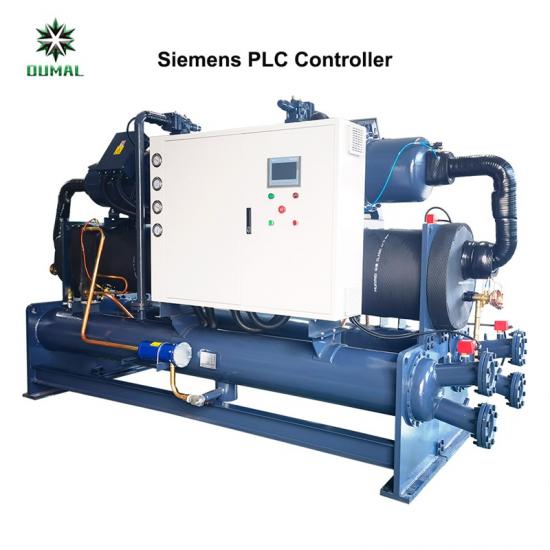
You must evaluate dual-circuit systems to ensure operational redundancy. Dual semi-hermetic twin-screw compressors run on independent refrigeration circuits. If one circuit stops, the second circuit maintains continuous cooling for your industrial process. This setup protects plant production during maintenance. Separate circuits reduce mechanical stress across heavy production shifts.
Proper oil management directly protects compressor components from premature wear. Malfunctions in oil return lines lower total system reliability. For instance, a damaged coalescing element lets oil bypass the separator. This issue causes oil to coat internal heat exchanger surfaces, which degrades thermal efficiency and consumes extra electrical energy.
|
Issue |
Cause |
Effect on System Reliability |
|---|---|---|
|
Oil not returning |
Blocked return line or stuck valve |
Low oil level trips compressor, risking bearing failure |
|
Oil bypasses separator |
Damaged coalescing mesh element |
Oil coats evaporator, reducing thermal efficiency and cooling capacity |
Low-temperature chillers demand automated freeze protection to prevent costly equipment failure. Built-in flow switches and anti-freezing sensors shut down the system before fluid turns to ice. Solid ice formation ruptures internal shell-and-tube barrels. You protect structural integrity by verifying these safety controls before purchasing a chiller.
Evaluating lifecycle expenses requires looking beyond initial procurement costs. Modern chillers cut daily energy consumption through dynamic capacity modulation. High-efficiency heat exchangers reduce overall energy draw during peak process load operations. Installing efficient chillers boosts energy efficiency and protects long-term plant profitability. Lower energy usage decreases utility expenses over extended operating shifts. Reliable chillers maintain overall system reliability while preventing unscheduled downtime. Proper setup of a primary chiller and secondary chillers ensures steady output under variable thermal load shifts. Selecting an optimized chiller saves electrical energy every single day. A high-capacity process chiller delivers dependable long-term cooling output. Each specialized water-cooled chiller stabilizes fluid temperatures effectively. This reliable chiller minimizes overall utility expenses and reduces factory operational overhead.
Procuring an industrial low temperature screw chiller requires rigorous technical verification. You must evaluate compressor staging, fluid viscosity, heat exchanger selection, and safety interlocks. Detailed specification checks prevent costly process downtime, excessive energy consumption, and premature equipment failure. Selecting water-cooled systems over air cooled chillers protects plant reliability during heavy production cycles. Outdoor air cooled chillers face performance drops during extreme heat spikes, wasting critical energy in hot climates.
Your engineering team should consult factory application experts before ordering a custom chiller. Experts validate custom voltage supply, fluid dynamic variables, and ambient operating conditions. These proactive verification steps ensure long-term cooling efficiency across every facility application.
An industrial low temperature screw chiller delivers nominal cooling capacity over 500 kW. The primary chiller achieves leaving fluid temperatures down to -3°C. Dual compressors modulate output step-less from 0% to 100% capacity. You achieve reliable continuous cooling for process systems and large hvac networks. Every specialized chiller protects factory output.
Understanding how air cooled chillers work involves examining heat rejection through ambient air coils. Different types of air cooled chillers route refrigerant through finned coils. Standard air cooled chillers require no cooling tower infrastructure. However, water-cooled systems outperform outdoor air cooled chillers during extreme summer heat.
The applications and benefits of air cooled chillers include lower installation costs and flexible outdoor placement. Facilities utilize air cooled chillers for rapid setup. Many plants install air cooled chillers outdoors. However, water-cooled industrial chillers manage heavy load demands inside noise-sensitive factory spaces much better.
You evaluate dynamic load fluctuations across daily operational shifts. A primary commercial chiller system uses dynamic modulation to match changing factory demands. Installing a backup commercial chiller system protects critical production lines. Modern plant chillers maintain thermal stability, while specialized process chillers optimize power. A compact chiller cuts energy draw, while a secondary chiller prevents downtime.



Friendly Links :
www.dyyseo.com en
en es
es