
Categories
New Blog
The modular split design stands as the single biggest advantage of a split air cooled chiller system. You eliminate the need for cooling towers and complex water piping entirely. This simplicity transforms your facility's approach to industrial cooling.
Why choose this cooling system for your plant? The top benefits answer that question directly. You gain faster installation, lower energy consumption, reduced maintenance demands, easy scalability, and stronger environmental compliance. These advantages address the daily challenges you face with traditional water-cooled systems. For summer cooling demands, the split configuration delivers reliable comfort without extensive infrastructure changes. This design makes retrofit projects practical, even when space is tight. You achieve dependable performance while avoiding the operational headaches of water treatment and tower maintenance.
Split chillers require no cooling tower or complex water piping.
Energy efficiency comes from part-load performance and free cooling.
Modular design allows adding units without shutting down operations.
You save water and reduce environmental impact with air-cooled systems.
The benefits of this chiller design directly address common facility challenges. You reduce infrastructure complexity and speed up deployment. The OMC-30A model from Oumal Chiller exemplifies these advantages with its modular split configuration.
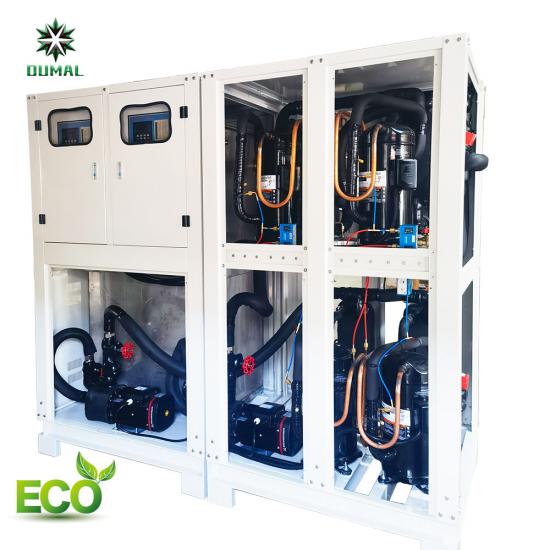
Traditional water-cooled chillers require an entire support network. Cooling towers need water supply lines, chemical treatment systems, and discharge permits. The OMC-30A split air cooled chiller system eliminates this entire infrastructure. You connect the evaporator module to the air-cooled condenser module. The condenser uses ambient air to reject heat. No cooling tower or water piping enters your facility.
This change reduces onsite labor significantly. Your team avoids running water pipes across the entire building. You skip the process of setting up water treatment equipment and chemical pumps. The system transfers heat directly to outdoor air through the condenser module. This advantage is critical for any retrofit project in a facility with limited space. Installation is quick and simple when no water infrastructure is required.
Your team completes the setup in a fraction of the time needed for water-cooled alternatives. The cost savings extend beyond labor. You avoid purchasing cooling towers, chemical feed systems, and water treatment controllers. The floor space normally reserved for this equipment becomes available for other uses.
The split configuration gives you placement flexibility that single-unit chillers cannot match. You install the evaporator unit indoors near the equipment needing precise process temperatures. The condenser module sits outside on a concrete pad or on a rooftop support frame. This separation allows you to fit the system into spaces that a traditional packaged chiller cannot occupy.
No ductwork required. Unlike central systems that need extensive duct runs, the split chiller delivers targeted cooling directly to the connected equipment. Each module occupies a fraction of the space of a traditional cooling system. For mechanical rooms and crowded production floors, this flexibility solves a major constraint.
The OMC-30A demonstrates this flexibility well. Its modular design fits through standard doorways and into freight elevators. Your crew transports the modules individually to the final placement location. You avoid structural modifications and heavy lifting equipment entirely. This capability makes the system ideal for multi-story buildings and sensitive retrofit environments.
The OMC-30A split air cooled chiller system delivers measurable improvements in energy efficiency. The combination of eco-friendly refrigerants and ambient-air cooling creates a design that cuts operating costs. Two key features drive this advantage: superior part-load performance and free cooling capability.
Your industrial process rarely demands full cooling capacity. Most industrial chillers operate far below their rated output for the vast majority of their lifespan.
Most chillers spend 80–90 percent of their life operating below full load. That’s where the real energy consumption sits — not at peak output.
The split air cooled chiller system excels in these conditions. The OMC-30A supports multiple eco-friendly refrigerant options, including R22, R407C, R410A, and R134A. These refrigerants maintain efficient heat transfer as the load fluctuates. The ambient-air cooling mechanism adjusts fan speed and compressor operation to match the exact demand. This design delivers superior performance without wasting electricity. Your system efficiency stays high across all operating points.
You gain real savings from this responsiveness. Traditional systems keep pumps and towers running at fixed speeds. The split system runs only the components needed for the current load. This reduces annual energy bills substantially. The comfort of knowing your operating costs remain predictable adds another layer of value.
Free cooling takes advantage of low outdoor temperatures. When ambient air is cool enough, the system uses it directly to satisfy the cooling demand. The compressor reduces its workload or shuts off entirely. This process consumes only fan power, which is a fraction of full mechanical cooling.
The OMC-30A exploits this opportunity through its air-cooled condenser module. The unit automatically switches to free cooling mode when conditions permit. Your facility achieves substantial efficiency gains during cooler months and shoulder seasons. Even under summer cooling demands, the system maintains excellent overall performance. The entire cooling system benefits from reduced runtime on the compressor and related components. This extends equipment service life and lowers maintenance frequency.
The combination of these two features makes the split air cooled chiller system a strong investment for energy-conscious facilities.
The split air cooled chiller system reduces your maintenance burden from day one. You eliminate the most failure-prone components found in traditional water-cooled setups. This design philosophy translates directly into lower service costs and fewer unplanned shutdowns.
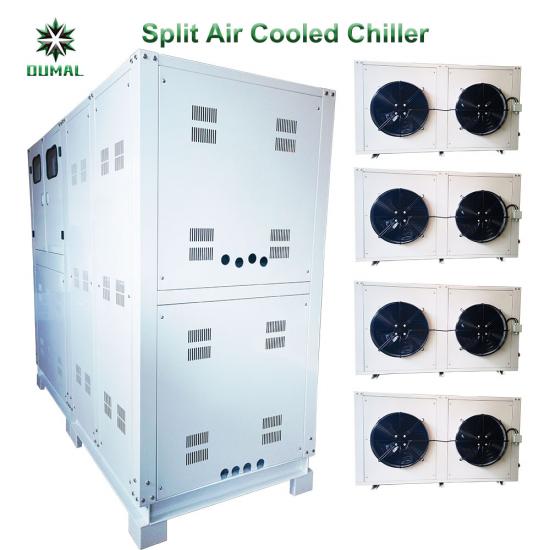
Water-cooled systems demand constant attention. You manage cooling tower fans, water pumps, chemical feed systems, and complex piping networks. Each component represents a potential failure point. The OMC-30A removes these entirely. No water pump operates. No cooling tower requires cleaning. No chemical treatment program demands monitoring.
Your maintenance team focuses on the essential components only. The air-cooled condenser needs periodic coil cleaning to maintain heat transfer efficiency. You check refrigerant levels and inspect electrical connections. That routine covers most of the required upkeep. The absence of water eliminates scale buildup, corrosion, and biological growth that plague traditional systems. You avoid the costly descaling procedures and water quality testing that consume maintenance budgets.
The durable construction of the OMC-30A extends service intervals further. High-quality materials and components withstand demanding industrial environments. You gain reliable performance without constant intervention. This simplicity proves especially valuable for facilities without dedicated maintenance staff. Your team handles routine checks quickly, and you schedule professional service less frequently. The result is a cooling system that spends more time running and less time waiting for repairs.
Reliability depends on more than robust construction. You need protection against operational anomalies that cause premature failure. The OMC-30A incorporates comprehensive safety features that safeguard your investment. Compressor overheating protection prevents damage during extreme operating conditions. Over-current protection shuts down the system before electrical faults escalate. High and low-pressure switches maintain safe operating envelopes.
Additional protections cover over-temperature conditions, insufficient flow, phase reversal, and phase loss. Exhaust overheating protection adds another layer of defense. These safeguards operate automatically. You receive early warning of developing issues rather than discovering them after catastrophic failure. This proactive approach minimizes downtime and extends equipment lifespan.
The combination of fewer components and comprehensive protection delivers measurable reliability gains. Your production processes maintain consistent cooling without interruption. You avoid the ripple effects of chiller failure that halt entire production lines. For critical industrial applications, this dependable operation justifies the investment. You achieve peace of mind knowing your system monitors itself and responds to abnormal conditions before they cause damage.
Your facility's cooling demands rarely stay constant. Production lines expand. New equipment arrives. Seasonal shifts alter thermal loads. A split air cooled chiller system grows alongside your operation without forcing you to replace the entire infrastructure. This modular approach transforms how you plan for capacity changes.
Traditional central chillers lock you into a single capacity decision. You oversize at installation to accommodate future growth, paying for unused capacity from day one. Or you undersize and face a complete system replacement when demand exceeds your original design. The split configuration eliminates this dilemma entirely.
You add cooling capacity incrementally as your needs evolve. Each new unit connects to your existing system without disrupting current operations. Your production line keeps running while technicians install and commission the additional module. No shutdown window required. No lost production time. This capability proves invaluable during peak seasons when you cannot afford downtime.
The modular design also supports staged installation budgets. You purchase one unit now, then add a second or third unit as revenue justifies the expansion. This financial flexibility matters for growing operations with capital constraints. You match your cooling investment to your actual production output rather than speculative forecasts.
Industry modular systems typically support 3–10 modules per bank, according to Trane's Thermafit™ product specifications. This range accommodates substantial capacity growth while maintaining a single cohesive control network.
Each module operates independently within the bank. You gain true zoned temperature control across different process areas. One module serves your injection molding line at 10°C while another maintains 18°C for your electronics assembly area. This granular control improves overall system efficiency because you run only the capacity each zone requires.
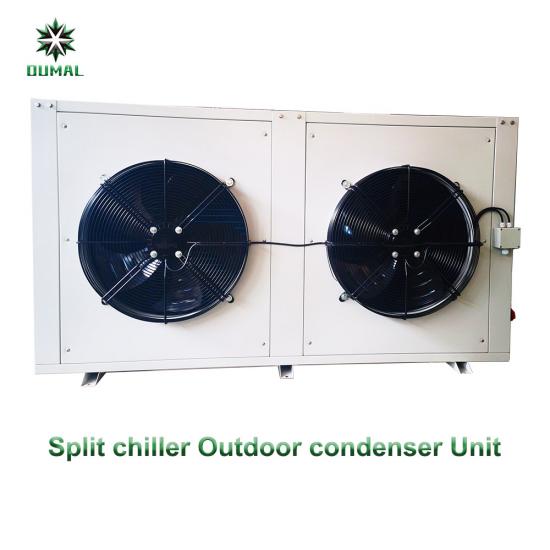
Process interruptions cost money. A chiller failure during a production run can ruin materials, damage equipment, and halt shipments. The modular nature of split systems provides a practical solution: N+1 redundancy.
You configure your system with one additional module beyond your calculated peak demand. If your process requires 60 tons of cooling, you install three 30-ton units instead of two. Under normal operation, all three units share the load. Each unit runs at approximately 67 percent capacity, which keeps efficiency high and wear low. If one unit fails or requires maintenance, the remaining two units handle the full 60-ton load without interruption.
This redundancy protects your critical processes without the expense of a fully duplicated backup system. You gain the security of uninterrupted cooling at a fraction of the cost of a standby chiller. The control system automatically redistributes the load across available modules when one drops offline. Your operators receive an alert, but production continues unaffected.
The same architecture supports planned maintenance without disruption. You isolate one module for service while the others maintain your required cooling capacity. This scheduled approach eliminates emergency repairs during production hours. Your maintenance team works during normal business hours, and your process never stops.
For facilities where cooling failure creates safety hazards or product loss, this redundancy delivers peace of mind. You build resilience into your cooling infrastructure at a reasonable cost. The modular split system adapts to your growth trajectory while protecting the operations you run today.
Your facility's environmental footprint directly impacts regulatory compliance and operating costs. The split air cooled chiller system addresses both concerns. You reduce water consumption and minimize refrigerant-related risks. This dual benefit gives you comfort in knowing your cooling infrastructure meets modern standards. The OMC-30A demonstrates these advantages through CE certification and eco-friendly refrigerant options.
Your cooling system no longer depends on a continuous water supply. The system rejects heat using ambient air. No cooling tower demands make-up water. No drift losses waste thousands of gallons annually. This design saves substantial water volume every year.
Water treatment chemicals become unnecessary. Traditional systems require biocides, scale inhibitors, and corrosion inhibitors. Your team must store, handle, and dispose of these chemicals. The split system eliminates this entire program. You avoid purchasing treatment chemicals. You remove the labor for testing water chemistry. You eliminate the risk of chemical spills or improper discharge. This simplification improves workplace safety and reduces environmental liability.
The OMC-30A operates completely without water consumption. Its air-cooled condenser transfers heat directly to the outdoor environment. This design proves valuable in water-stressed regions. It also supports facilities pursuing sustainability certifications. The elimination of water discharge simplifies your regulatory compliance burden.
The split configuration reduces refrigerant charge per circuit compared to central systems. Each module contains only the refrigerant needed for its dedicated circuit. A leak in one module affects a smaller refrigerant volume. Your team isolates and repairs the affected circuit while other modules continue operation. This design limits environmental release during service events.
The OMC-30A uses eco-friendly refrigerants including R22, R407C, R410A, and R134A. These options comply with international environmental standards. CE certification confirms the system meets European safety and environmental requirements. Your facility gains confidence that the equipment operates within regulatory guidelines.
Lower refrigerant charge also creates a safety advantage for your maintenance team. The reduced volume minimizes exposure risk during routine service. Your technicians handle smaller quantities of refrigerant. This factor reduces the potential impact of accidental release during maintenance procedures. The combination of lower charge and eco-friendly refrigerants delivers measurable environmental and safety benefits.
These top benefits directly solve your industrial challenges. Quick installation eliminates infrastructure delays. Lower energy bills reduce operational strain. Minimal maintenance frees your team for productive work. Future-proof scalability supports growth without disruption. Eco-compliance satisfies regulatory demands.
For most industrial applications, a split air cooled chiller system delivers the best balance of simplicity and lifecycle cost. You gain dependable cooling without water treatment burdens or tower maintenance. This design provides consistent comfort even during peak summer cooling months.
Evaluate your specific cooling needs against these advantages. Consider models like the OMC-30A for a proven, reliable solution backed by CE certification and a 15-month warranty.
Most installations complete within days, not weeks. The OMC-30A arrives as two modules. Your team positions the evaporator indoors and the condenser outdoors. No water piping or cooling tower construction delays the project. This speed makes the system ideal for urgent retrofit needs.
The unit operates reliably within a 5-35°C ambient range. Its air-cooled condenser rejects heat efficiently even during peak summer conditions. The built-in high-pressure protection safeguards the system when outdoor temperatures approach the upper limit. Your process maintains consistent cooling throughout the season.
Yes. The modular design supports adding units without shutting down your existing system. You connect additional modules as production demands grow. Each unit operates independently, so you match capacity to actual load. This approach avoids the cost of oversizing at initial purchase.
You clean the condenser coils periodically to maintain heat transfer efficiency. Check refrigerant levels and inspect electrical connections during routine service. No water treatment, tower cleaning, or chemical monitoring exists. This simplified upkeep reduces your maintenance budget substantially.
Absolutely. The system uses ambient air as its sole cooling medium. You eliminate water supply lines, discharge permits, and treatment chemicals entirely. This design suits facilities in water-stressed regions or those seeking to reduce environmental impact. Your operation gains reliable cooling without water dependency.



Friendly Links :
www.dyyseo.com en
en es
es