
Categories
You face demanding environments in industries like plastics, beverage, chemical, metalworking, and data centers. Each sector battles extreme temperatures, high humidity, water scarcity, and the risk of corrosion. A water cooled chiller, such as the advanced 150HP Box Type Cabinet-Enclosed model, gives you a reliable answer for industrial cooling. See how these challenges compare:
|
Challenge |
Description |
|---|---|
|
Heat Dissipation Efficiency |
Consistent cooling in high ambient temperatures and variable thermal loads. |
|
Water Usage Management |
Significant water consumption and the need for efficient use and recycling. |
|
Corrosion and Scaling |
Material degradation from saline air, chemical exposure, and scale formation. |
Water cooled chillers excel in heat dissipation, making them ideal for high-load industrial environments.
Efficient water management strategies, like recycling and using non-potable water, can significantly reduce operational costs.
Regular maintenance and using high-quality materials extend the lifespan of water cooled chillers, ensuring reliable performance.
Water cooled chillers are more energy-efficient than air-cooled systems, leading to lower electricity bills and reduced environmental impact.
Cabinet-enclosed designs simplify maintenance, allowing for easy access and routine checks without specialized skills.
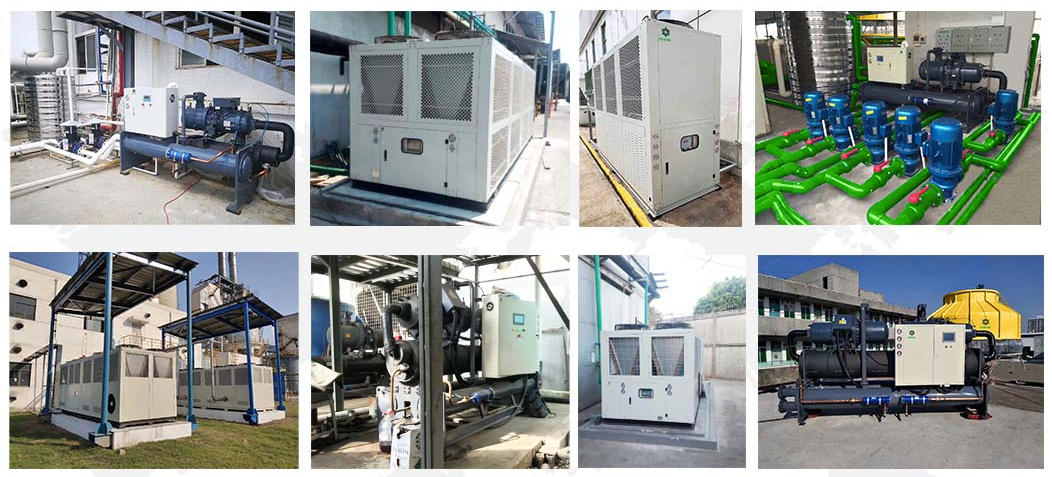
You face unique cooling challenges when you operate in high-load industrial environments. These settings often deal with intense heat from equipment, variable thermal loads, and high ambient temperatures. Efficient heat dissipation becomes a top priority for you to maintain safe and stable operations. The following table highlights the main cooling challenges you encounter:
|
Challenge |
Details |
|---|---|
|
Heat Dissipation Efficiency |
Achieving high-efficiency heat dissipation is difficult due to high ambient temperatures and variable thermal loads. |
|
Water Usage Management |
Significant water consumption through evaporation and drift loss necessitates careful management. |
|
Corrosion and Scaling |
Harsh conditions lead to material degradation, requiring attention to prevent equipment failure. |
You see these challenges in industries with dense equipment layouts. Higher tonnage and airflow values signal greater cooling loads. Factories with less need for fresh air may experience fewer issues, but most industrial cooling applications demand robust solutions.
You benefit from water cooled chillers because they excel at heat dissipation. Water acts as an effective liquid medium for absorbing and transferring heat. This technology outperforms air-cooled systems, especially in large-capacity operations. Here’s why water cooled chillers stand out:
Water absorbs heat better than air, making liquid cooling more efficient for industrial cooling.
Water cooled chillers use liquid to remove heat from the refrigerant, which increases heat dissipation efficiency.
These systems maintain lower condenser temperatures, so you use less electricity and save on energy costs.
Water’s higher thermal conductivity means you achieve better heat transfer, even when cooling loads fluctuate.
The 150HP Box Type Cabinet-Enclosed Water Cooled Screw Chiller brings you advanced technology in a compact, robust package. Its design maximizes heat dissipation while protecting components from harsh environments. You can install this unit outdoors, which saves space and simplifies your setup. The cabinet-enclosed structure ensures reliable operation and efficient liquid cooling, even under demanding conditions.
You gain peace of mind knowing that this technology supports your industrial cooling needs with consistent performance and minimal maintenance.
You face significant water usage management issues in industrial cooling. Data centers and factories use vast amounts of water each year. For example, a medium-sized data center can consume up to 110 million gallons of water annually. Larger facilities may use as much as 1.8 billion gallons per year. This level of water consumption matches the needs of entire towns. Cooling towers often account for half of a facility’s total water use. You must also meet strict regulations that require you to reduce water consumption. Lowering water use not only helps you comply with these rules but also saves you money on operational costs.
You can see that water usage management is a top priority. Many industries now focus on recycling and conservation. Using non-potable or reclaimed water helps you reduce your reliance on fresh water. Rainwater harvesting systems can further improve your water usage effectiveness. These strategies can lower your facility’s costs by up to 30% over its lifetime.
Modern liquid cooling technology offers you advanced solutions for water management. Integrated pumps and tanks in water cooled chillers play a key role. They keep water in a sealed loop, which minimizes loss and allows you to reuse cooling water multiple times. This approach limits evaporation, making it ideal for regions with water stress.
|
Feature |
Contribution to Water Conservation |
|---|---|
|
Sealed Loop |
Minimizes water loss by keeping water in a closed system |
|
Reuse |
Allows cooling water to be reused multiple times |
|
Evaporation |
Limits evaporation, ideal for water-stressed regions |
You benefit from immersive liquid cooling and chassis-level immersion. These methods support sustainability by reducing your carbon footprint. Liquid cooling technology can cut energy use by 25-40%, which lowers your operational costs. You also get more compact designs, maximizing your data center’s capacity without needing extra space. With less maintenance and fewer breakdowns, your hardware lasts longer. Waste heat recycling becomes possible, further reducing your environmental impact. By adopting chassis-level immersion and immersive liquid cooling, you ensure efficient and responsible industrial cooling.
You depend on water cooled chillers to deliver long-lasting performance in demanding industrial environments. These systems often operate for 15 to 20 years when you maintain them properly. You can extend their lifespan by following routine maintenance schedules and monitoring environmental conditions. Many chillers use premium materials such as stainless steel, copper, brass, and aluminum. These materials resist corrosion and scaling, which helps your equipment stay reliable. You also benefit from corrosion inhibitors and pH control in the liquid cooling loop. These features protect metal surfaces and keep water chemistry balanced.
Tip: Regular maintenance and stable water flow prevent stagnant zones, which reduces the risk of pitting and crevice corrosion.
You see that durability depends on both design and operation. High-quality components and protective features ensure your chiller withstands harsh conditions. You avoid costly downtime and keep your production running smoothly.
The average lifespan of water cooled chillers is 15–20 years.
Proper maintenance and environmental control extend this lifespan.
Premium materials and corrosion inhibitors protect against scaling and corrosion.
You face several threats to your cooling system, including biofilm presence, localized corrosion, microbial by-products, erosion corrosion, pitting, galvanic corrosion, crevice corrosion, and stress corrosion cracking. These issues can damage your liquid cooling loop and reduce efficiency. You minimize these risks by using advanced materials and protective features.
|
Material |
Description |
Purpose in Chillers |
|---|---|---|
|
Stainless Steel |
Corrosion resistance and durability |
Prevents corrosion in heat exchangers |
|
Copper |
High thermal conductivity and corrosion resistance |
Used in piping and heat exchangers |
|
Brass |
Strength and corrosion resistance |
Durable fittings |
|
Aluminum |
Lightweight and corrosion resistant |
Structural parts and heat exchangers |
|
Corrosion Inhibitors |
Chemicals that protect metal surfaces |
Enhance corrosion resistance in liquid |
Automated controls in water cooled chillers monitor and adjust operational parameters in real time. You benefit from predictive algorithms that anticipate cooling demands and optimize liquid flow. These systems maintain precise temperature control and reduce energy consumption. You achieve reliable operation and minimize the risk of scaling or corrosion in your liquid cooling loop.
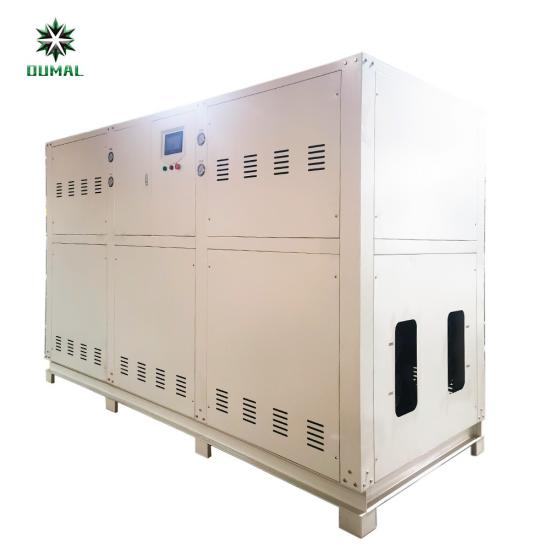
You want to lower your facility’s energy bills while keeping your operations cool and stable. A water cooled chiller gives you a clear advantage over other cooling options. Water cooled chillers use liquid as the main cooling medium, which allows for higher heat transfer rates. This means you get more cooling power with less electricity. Cooling towers help by lowering the temperature of the liquid before it returns to the chiller, so your system works more efficiently. You will notice that water cooled chillers maintain steady performance even when outside temperatures rise. Air-cooled systems often struggle in hot weather, but water cooled chillers keep your industrial cooling reliable.
Water cooled chillers are more energy-efficient than air-cooled chillers.
Air-cooled chillers depend on outside air, which can reduce efficiency in hot climates.
Water cooled chillers deliver consistent cooling, making them ideal for stable industrial cooling.
You also benefit from energy efficiency that can scale as your facility grows. This approach supports sustainability and helps you meet your environmental goals.
When you choose a 150HP Box Type Cabinet-Enclosed Water Cooled Screw Chiller, you get features that save both energy and money. The integrated chassis design improves thermal efficiency and reduces energy use. Premium compressors from Hanbell or Bitzer ensure reliable operation and a low failure rate. High-quality accessories, such as Siemens controllers and Danfoss or Emerson valves, make maintenance easier and boost overall performance.
|
Feature |
Benefit |
|---|---|
|
Integrated chassis design |
Improves system thermal efficiency, reduces energy consumption, and lowers operating costs. |
|
Premium components (Hanbell/Bitzer) |
Ensures system reliability and a low failure rate. |
|
High-quality accessories |
Enhances overall performance and maintenance ease. |
You will see lower electricity bills because the water cooled chiller uses liquid to transfer heat more efficiently. This leads to significant energy savings and reduced operational costs. The compact design also saves valuable floor space and makes installation simple. You can even explore heat re-use options, turning waste heat into a resource for other processes. This adds another layer of efficiency and supports your sustainability efforts.
Note: Using a water cooled chiller with advanced liquid cooling technology helps you achieve reliable, cost-effective, and sustainable industrial cooling.
You want to keep your industrial cooling system running smoothly with minimal interruptions. Cabinet-enclosed water cooled chillers make maintenance requirements easier for you. You can perform routine checks without needing specialized skills. The protective cabinet shields components from dust and weather, so you spend less time cleaning and inspecting. You should follow a regular maintenance schedule to prevent issues and extend the lifespan of your chiller.
Maintenance for cabinet-enclosed water cooled chillers should be performed at least twice a year.
If you use your chiller extensively, you may need quarterly or even monthly inspections.
Early detection of potential issues helps you avoid costly repairs and unplanned downtime.
Regular maintenance requirements help you identify problems before they affect performance. You reduce the risk of system failure and keep your operations running. You also ensure continuous operation, which is vital for high performance computing and other demanding applications.
Tip: Routine inspections and proactive care extend the life of your industrial cooling equipment and minimize downtime.
You face unique data center challenges when you manage cooling for high-density environments. As computing power increases, traditional air cooling systems struggle to keep up. Server racks with densities around 70 kilowatts often create hot spots and uneven airflow. These issues can lead to hardware failures and rising energy consumption. You need more efficient cooling methods to maintain data center efficiency.
Water cooled chillers provide targeted cooling for high performance computing and dense server racks. Liquid cooling technology, especially direct-to-chip systems, offers improved energy efficiency and reliable temperature control. You must coordinate between IT and facilities to prevent overheating and ensure uptime. Advanced filtration and monitoring systems help you manage liquid cooling in high-density environments. Safety concerns with medium voltage power systems require specialized training for your staff.
|
Data Center Challenge |
Solution Provided by Water Cooled Chillers |
|---|---|
|
Hot spots and uneven airflow |
Targeted liquid cooling for consistent temperatures |
|
Rising energy consumption |
Improved energy efficiency and lower operational costs |
|
Uptime and reliability |
Real-time monitoring and proactive maintenance |
You address skill gaps by training your team to handle liquid cooling systems. By adopting water cooled chillers, you meet the demands of modern data centers and ensure reliable industrial cooling.
You gain powerful advantages with advanced water cooled chillers like the 150HP Box Type Cabinet-Enclosed model. These systems deliver high energy efficiency, reliable performance, and easy installation across many industries. Key metrics show strong results:
|
Metric |
Benefit |
|---|---|
|
Efficiency as a Production Driver |
Lower energy use, supports productivity |
|
Environmental Stability (Delta-T) |
Consistent cooling, better product quality |
|
Adaptability |
Efficient at varying loads |
Choose water cooled chillers to boost your facility’s performance and long-term savings.
You see the greatest benefits in plastics, beverage, chemical, metalworking, and data center industries. These sectors require stable cooling for equipment and processes. Water cooled chillers help you maintain consistent temperatures and improve production quality.
You get a plug-and-play solution with integrated pumps and tanks. The cabinet protects components from weather. You can install the unit outdoors without building a special room. This design saves you time and construction costs.
You should check your chiller at least twice a year. For heavy use, inspect it every three months. Regular maintenance helps you prevent breakdowns and extend the life of your equipment.
You use water as the cooling medium, which transfers heat better than air. Advanced models include high-quality compressors and smart controls. These features help you lower energy consumption and reduce operating costs.
Yes, you can handle routine maintenance tasks without advanced training. The cabinet-enclosed design makes access easy. Automated controls guide you through basic checks and adjustments.



Friendly Links :
www.dyyseo.com en
en es
es