

Categories
You want to select the optimal chiller type for your business based on facility size, climate, and operational needs. Water cooled screw chillers dominate the industrial market, holding over 60% share due to high energy efficiency, compact design, and long lifespan. Air cooled chillers fit small commercial spaces and colder climates, offering straightforward maintenance. Advanced chillers, such as the Water Cooled Screw Chiller Glycol Chiller 40 tr, deliver reliable performance and sustainability, helping you align with economic and environmental goals.
Water cooled screw chillers are ideal for large facilities due to their high energy efficiency and ability to handle large cooling loads.
Air cooled chillers offer lower installation costs and simpler maintenance, making them suitable for smaller spaces and quick setups.
Consider your local climate when choosing a chiller; water cooled systems perform better in hot conditions, while air cooled systems may struggle.
Evaluate your budget carefully; while water cooled chillers have higher upfront costs, they can lead to lower operational expenses over time.
Always match your chiller choice to your facility's size and cooling needs for optimal performance and cost savings.
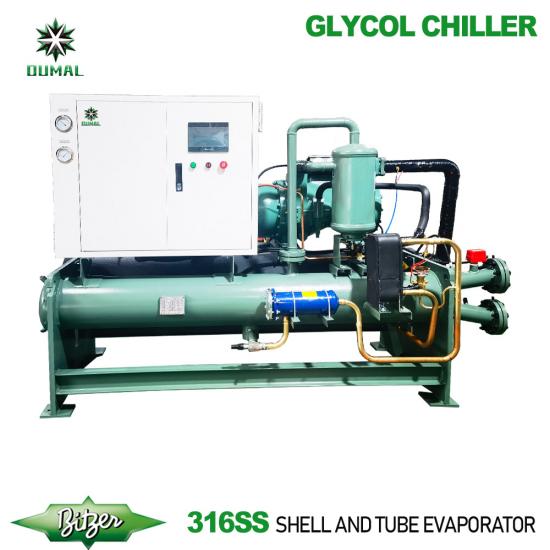
You rely on a water cooled screw chiller to deliver consistent and efficient cooling for your business. This cooling system uses water as the primary medium to remove heat from your processes. The core of the system features screw chillers, which use two interlocking screws to compress the refrigerant. This process increases pressure and reduces the volume of the refrigerant, allowing for effective heat transfer.
Here is a quick overview of the main components and their functions:
|
Component |
Function |
|---|---|
|
Screw Compressors |
Compress the refrigerant through two rotating screws, increasing pressure and reducing volume. |
|
Evaporator |
Collects heat from hot water, changing refrigerant from liquid to gas. |
|
Condenser |
Eliminates heat from the refrigerant, condensing it back to liquid using cooling water. |
|
Expansion Valve |
Reduces pressure and increases volume of refrigerant, restoring it for further compression. |
|
Refrigerant Cylinder |
Holds the refrigerant fluid necessary for cooling. |
|
Fan or Propeller |
Propels the refrigerant through the system to the compressor. |
|
Control Panel |
Main control unit for the chiller, facilitating operation and monitoring. |
You see these components working together to deliver reliable cooling capacity for demanding environments.
When you choose a water cooled screw chiller, you gain access to advanced features that boost performance and efficiency. The Water Cooled Screw Chiller Glycol Chiller 40 tr stands out with its smart controls, eco-friendly refrigerants, and energy-saving technology.
|
Feature |
Description |
|---|---|
|
Smart Controls |
Includes PLC controllers and microprocessor systems for precise monitoring and operation. |
|
Eco-Friendly Refrigerants |
Utilizes refrigerants with lower global warming potential to meet sustainability goals. |
|
Energy-Saving Tech |
Features variable speed drives and advanced heat exchangers for improved energy efficiency. |
You benefit from high energy efficiency ratios, which surpass those of air-cooled systems. Water cooling enhances heat transfer, reducing energy consumption and operational costs. You also minimize your carbon footprint, supporting your sustainability initiatives. The advanced control systems ensure precise temperature management, which is critical for sensitive industrial processes. Safety features, such as high/low pressure protection and anti-freezing measures, provide peace of mind during operation.
You find water cooled screw chillers in a wide range of industries due to their reliability and versatility. Common applications include:
Manufacturing: You use these chillers for processes that require precise temperature control, such as injection molding and food processing.
Data Centers: You depend on them to maintain optimal temperatures in server rooms, ensuring equipment longevity and reliability.
Commercial Buildings: You employ these chillers in HVAC systems to create comfortable environments in office buildings and shopping centers.
Chemical Processing: You rely on them to regulate temperatures in chemical reactions, ensuring safety and efficiency.
You can trust a water cooled chiller to deliver robust performance and long-term value in any demanding industrial setting.
You depend on an air cooled chiller when you need a reliable cooling solution that uses ambient air instead of water. The system operates in a closed-loop process. The evaporator absorbs heat from the processed water, causing the refrigerant to turn into a low-pressure vapor. The compressor then increases the pressure, transforming the vapor into a high-pressure gas. This gas moves to the air-cooled condenser, where air cooling removes the heat and condenses the refrigerant back into a liquid. The liquid passes through an expansion valve, dropping in pressure and temperature, and returns to the evaporator to repeat the cycle. This efficient process ensures you maintain consistent cooling without relying on a water source.
You will notice several features that set an air cooled chiller apart from other systems. The table below highlights the main differences between air cooled and water cooled chillers:
|
Feature |
Air-Cooled Chillers |
Water-Cooled Chillers |
|---|---|---|
|
Cooling Mechanism |
Uses ambient air to cool refrigerant |
Uses water to cool refrigerant |
|
Installation Costs |
Higher due to air ducts and fans |
Generally lower installation costs |
|
Energy Consumption |
Higher due to fan operation |
Lower energy consumption |
|
Cooling Capacity |
Ranges from 7.5 – 500 tons |
Ranges from 10 – 4,000 tons |
|
Lifespan |
15 – 20 years |
20 – 30 years |
|
Efficiency |
Dependent on ambient air temperature |
More efficient overall |
|
Space Requirements |
Requires sufficient ambient air access |
Can be installed indoors without significant space needs |
|
Performance in High Temperatures |
Performs poorly in high ambient temperatures |
Better suited for high thermal output environments |
You benefit from the straightforward installation and the flexibility to place an air cooled chiller outdoors. The air-cooled screw chiller design also means you avoid the need for a cooling tower or complex plumbing. You can count on air cooling to simplify your maintenance routine and reduce water usage.
You find air cooled chiller systems in a variety of commercial and industrial settings. The air-cooled screw chiller works well for facilities that value easy installation and minimal infrastructure. The following table shows common business types that use air cooled chillers:
|
Business Type |
Description |
|---|---|
|
Shopping Malls |
Ideal for maintaining comfortable temperatures for shoppers and retailers. |
|
Industrial Parks |
Supports cooling needs for various industrial operations in a localized area. |
|
Hotels |
Provides efficient cooling for guest comfort and amenities. |
|
Medical Facilities |
Ensures critical temperature control for patient care and equipment. |
|
Outdoor Venues |
Facilitates cooling in open spaces for events and gatherings. |
You also see air cooled chiller systems in these sectors:
Food and Beverage Sector: You rely on air cooling to maintain product safety and quality.
Pharmaceutical Production: You use air-cooled screw chiller units to ensure strict temperature control for drug efficacy.
You choose an air cooled chiller when you need a flexible, low-maintenance, and effective air cooling solution for your business.
You want to maximize energy efficiency in your facility. Water cooled screw chiller systems consistently outperform air cooled chiller units in this area, especially in large-scale or continuous operations. Water-cooled screw chiller designs operate at lower condensing temperatures because they use water as the cooling medium. This reduces the workload on the compressor and lowers energy consumption. You benefit from stable chiller efficiency, even when outdoor temperatures rise, since the condenser-water temperature remains lower than the ambient air temperature.
In contrast, air-cooled screw chiller performance depends heavily on the surrounding air temperature. When the weather gets hot, the system must work harder, which increases energy use and reduces part-load efficiency. For businesses in warm climates or with high cooling demands, water cooled screw chiller solutions deliver superior energy efficiency and more predictable operating costs.
You must consider both upfront and ongoing expenses when choosing a chiller. Water cooled screw chiller systems often require a higher initial investment. You need to allocate space for a mechanical room and a cooling tower, and you must install additional piping and water treatment systems. However, you gain lower operating costs over time due to improved energy efficiency and reduced compressor workload.
Air cooled chiller units have lower installation costs because you can place them outdoors and avoid the need for a cooling tower. You save on infrastructure, but you may face higher energy bills, especially in hot climates. Over the lifespan of the equipment, the energy savings from a water cooled screw chiller can offset the higher initial investment, particularly in large facilities with steady cooling needs.
You want to keep your system running smoothly with minimal downtime. Maintenance requirements differ significantly between water cooled screw chiller and air-cooled screw chiller systems. The table below outlines the main tasks and their frequency:
|
Chiller Type |
Frequency |
Maintenance Tasks |
|---|---|---|
|
Water-Cooled |
Daily |
Check and record operating temperatures, pressures, refrigerant levels, inspect for leaks |
|
Water-Cooled |
Weekly |
Test water chemistry, clean strainers, check oil return, inspect electrical connections |
|
Water-Cooled |
Monthly |
Check compressor oil clarity, inspect motor starter contacts, check refrigerant moisture |
|
Water-Cooled |
Quarterly |
Clean water strainers, inspect vanes and bearings, test temperature sensors |
|
Water-Cooled |
Semi-Annual |
Check capacity control, send oil sample for analysis, inspect heat exchanger tubes |
|
Water-Cooled |
Annual |
Perform refrigerant leak test, complete oil analysis, clean condenser and evaporator tubes |
|
Air-Cooled |
As Needed |
Clean condenser coils, check refrigerant circuit for leaks, inspect compressor, check wires |
You spend more time maintaining water cooled screw chiller systems due to their complexity and water treatment needs. Air-cooled screw chiller units require less frequent maintenance, focusing mainly on coil cleaning and basic inspections. If you have limited maintenance staff or want a simpler routine, air cooled chiller systems may suit your needs.
You need to match your chiller to your facility’s cooling load. Water cooled screw chiller systems offer higher cooling capacities, making them ideal for large industrial plants, data centers, and manufacturing facilities. You can scale these systems to meet growing demands by adding more units or increasing system size.
Air-cooled screw chiller units typically serve smaller to medium-sized buildings. They provide flexibility for modular expansion, but their maximum capacity is lower than water cooled chiller systems. If your business expects significant growth or fluctuating cooling needs, water cooled screw chiller solutions provide better scalability and part-load efficiency.
You must consider your local climate when selecting a chiller. Here’s how each type performs:
Air cooled chiller systems lose efficiency in hot climates because they rely on ambient air for cooling.
Water cooled screw chiller units maintain high performance in all climates, as water conducts heat more effectively than air.
You experience lower energy consumption and more stable operating costs with water cooled screw chiller systems, especially in regions with high temperatures.
If your facility operates in a hot or humid environment, you gain a clear advantage by choosing a water cooled screw chiller.
You need to plan for installation space and noise levels. Water cooled screw chiller systems require a dedicated mechanical room and space for a cooling tower. This setup takes up more indoor space but operates quietly, making it suitable for hospitals, offices, and noise-sensitive environments.
Air-cooled screw chiller units are installed outdoors and need open space for airflow. They generate more noise due to fans and compressors. If you have limited indoor space and can tolerate higher noise levels, air cooled chiller systems offer a practical solution.
Tip: For noise-sensitive applications, water cooled screw chiller systems provide a quieter operation and help maintain a comfortable environment.
You want a reliable system that lasts. Water cooled screw chiller units have a longer average lifespan, typically ranging from 15 to 20 years. They deliver consistent performance and higher reliability, especially in demanding industrial settings. You benefit from larger cooling capacities and greater efficiency, which supports long-term operational stability.
Air-cooled screw chiller units have a shorter lifespan but are easier to install and maintain. They work well in locations with limited water supply or where quick deployment is necessary.
Summary Table: Water Cooled Screw Chiller vs Air Cooled Chiller
|
Feature |
Water Cooled Screw Chiller |
Air Cooled Chiller |
|---|---|---|
|
Energy Efficiency |
High, stable in all climates |
Lower, drops in hot climates |
|
Installation Cost |
Higher (mechanical room, tower) |
Lower (outdoor, less infrastructure) |
|
Operating Costs |
Lower (energy savings) |
Higher (especially in hot weather) |
|
Maintenance |
More frequent, complex |
Simpler, less frequent |
|
Capacity/Scalability |
Large, easily scalable |
Moderate, modular |
|
Climate Suitability |
All climates |
Best in mild/cool climates |
|
Space/Noise |
More space, quieter |
Outdoor, noisier |
|
Lifespan/Reliability |
15–20 years, very reliable |
Shorter, reliable for small/medium |
You can use this comparison to guide your decision and select the best chiller for your business needs.
You gain several advantages when you choose a water cooled screw chiller for your facility:
You achieve exceptional energy efficiency, which helps you reduce electricity bills and operational costs.
You handle large cooling loads without seeing performance drop, even during peak demand.
You maintain accurate temperature control, which supports stable operations and product quality.
You lower your energy consumption and carbon footprint, aligning with sustainability goals.
You often use natural refrigerants, which meet environmental regulations and reduce global warming potential.
You benefit from reliable heat dissipation, which keeps your system running smoothly.
Note: Water cooled screw chillers operate quietly, making them ideal for noise-sensitive environments.
You should consider a few challenges before selecting this type of chiller:
|
Disadvantage |
Description |
|---|---|
|
Installation Complexity |
You need a cooling tower and extra pumps, which increases initial costs. |
|
Water Dependency |
You rely on a steady water source and proper water treatment. |
You must perform regular maintenance, such as tube cleaning and compressor oil analysis, to keep the system efficient.
You need to plan for installation complexity and ensure proper execution.
You may face higher operational costs if you use untreated water, as it can increase condenser pressures.
You find air cooled chillers especially useful for small commercial facilities:
You save on installation and maintenance costs because the system has fewer components.
You do not need a water source, which gives you flexibility in choosing a location.
You reduce water consumption and lower your environmental impact.
You benefit from simple maintenance routines and high reliability.
You avoid the extra energy use required by cooling towers.
Tip: Air cooled chillers offer quick deployment and easy relocation if your needs change.
You may encounter some drawbacks with air cooled chillers:
|
Drawback |
Description |
|---|---|
|
High Noise Levels |
The system generates significant noise during operation. |
|
Lower Efficiency in Hot Climates |
The system requires more power and loses efficiency in high temperatures. |
You experience poor efficiency during hot weather.
You may find the service life shorter than water cooled models.
You cannot meet the high-load cooling needs of large buildings with this type of chiller.
You must evaluate your facility’s size and operational needs before selecting a chiller.
Water cooled chillers work best for large buildings and industrial plants, especially in hot climates where efficiency is critical.
Air cooled chillers suit smaller facilities or locations with limited water access. Their simple installation and maintenance make them ideal for offices, retail spaces, and small manufacturing units.
You should consider your geographic location and environmental conditions.
The chiller must match your cooling load, taking into account the highest heat generation and the most extreme weather conditions your facility faces.
In regions with high temperatures, water cooled systems maintain efficiency.
For applications with variable heat loads, you benefit from chillers with variable speed compressors or multiple compressors for optimal performance.
You need to balance initial investment with long-term expenses.
|
Chiller Type |
Initial Costs |
Operational Costs |
Maintenance Costs |
|---|---|---|---|
|
Water-Cooled |
Higher |
Lower |
Higher |
|
Air-Cooled |
Lower |
Higher |
Lower |
Air cooled chillers offer lower installation costs due to their straightforward infrastructure. Water cooled chillers provide energy savings over time, which can offset their higher upfront price. You should weigh these factors against your budget and expected operational duration.
You must assess your team’s capacity for ongoing maintenance.
Water cooled chillers require cooling towers, water treatment, and additional staffing for upkeep.
Air cooled chillers need less maintenance and fewer personnel, making them suitable for facilities with limited technical resources.
Choose air cooled chillers if your facility has limited space, needs a quick installation, or operates in a water-scarce area.
Evaluate ventilation and humidity before selecting an air cooled system to ensure efficient operation.
Opt for water cooled chillers for large-scale operations, high cooling loads, or when you need maximum energy efficiency.
Tip: Always match your chiller selection to your facility’s size, climate, and staffing resources for the best long-term results.
When you compare cooling solutions, focus on energy efficiency, cooling capacity, reliability, compatibility, total cost of ownership, and refrigerant type. Assess your facility’s size, climate, and budget by calculating cooling loads, considering installation space, and reviewing local conditions. To avoid common mistakes, analyze long-term costs and choose reputable suppliers for reduced maintenance. For the best results, consult a chiller expert or request a quote. Take these steps to select the right chiller for your business and ensure lasting performance.
You use water cooled chillers for large facilities and high efficiency. You choose air cooled chillers for smaller spaces and easier installation. Water cooled systems use water for heat removal. Air cooled systems use ambient air.
You calculate your cooling load based on your facility’s size, equipment, and process needs. You can consult a chiller expert for a precise recommendation. Proper sizing ensures efficient operation and cost savings.
Absolutely. You benefit from stable performance in hot climates because water cooled chillers do not rely on ambient air temperature. You maintain energy efficiency and consistent cooling even during extreme heat.



Friendly Links :
www.dyyseo.com en
en es
es