

Categories
Choosing the right air cooled screw chiller can seem hard. You have to pick the type and size that fits your job. Many manufacturers have problems like:
Keeping machines working, because cooling system breaks stop work.
Meeting project needs, since some jobs need special things.
Dealing with tough places, because weather can change how it works.
You need to find a good mix of efficiency, price, and trust to keep things running well.
Know what your factory needs for cooling. Figure out how much cooling is needed so your chiller works well when it is busy.
Pick a chiller that is the right size. If it is too small, things can get too hot. If it is too big, you will waste energy.
Find chillers that use less energy. Chillers with better ratings can help you spend less on power over time.
Think about how much work it takes to keep the chiller running. Air cooled chillers are easier to take care of than water cooled ones. This can help you save time and money.
Look at how good the maker is and what help they give. A good company gives better service and has more parts. This helps your chiller work well.
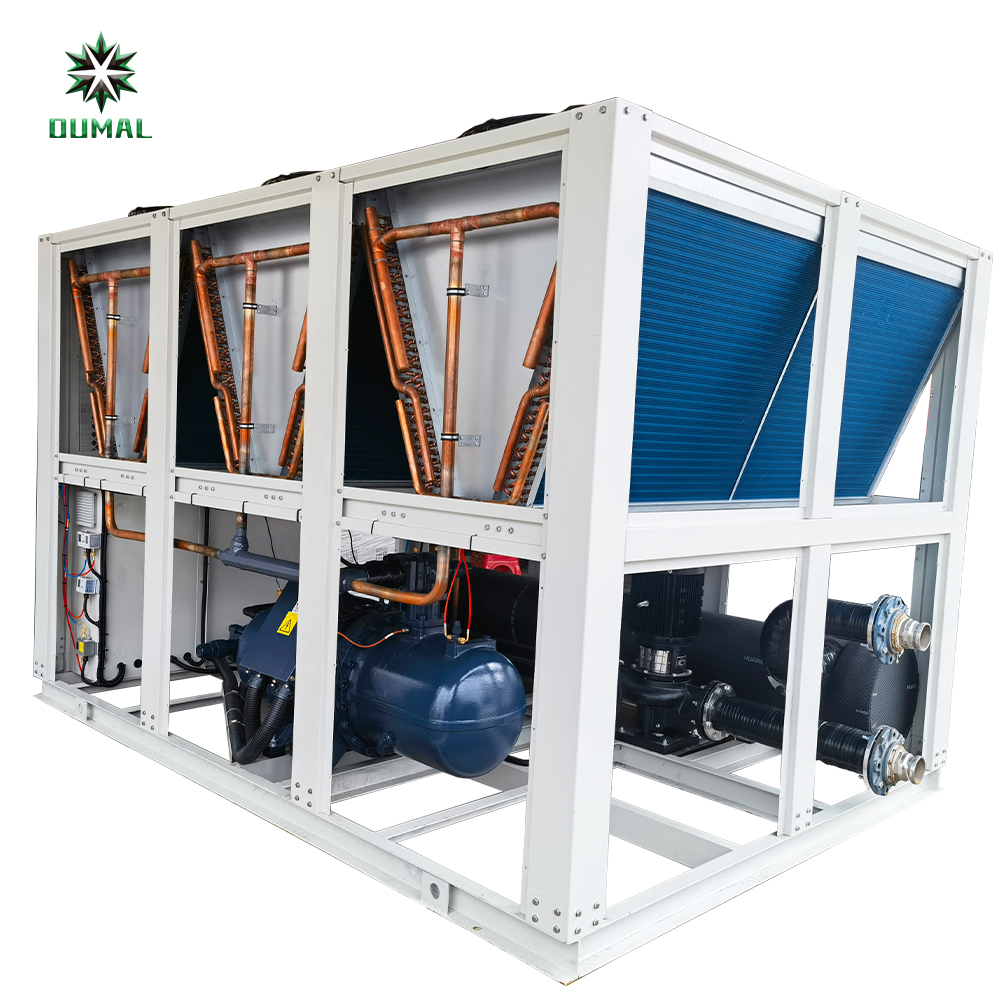
An air cooled screw chiller cools water for many jobs in factories. It uses a screw compressor to move refrigerant in a loop. The main parts are:
Compressor: It takes in low-pressure refrigerant gas and squeezes it into high-pressure gas.
Condenser: It turns the hot gas into a liquid by letting heat out into the air.
Condenser fans: They blow air over the condenser coils to help get rid of heat.
Expansion valve: It drops the refrigerant’s pressure before it goes into the evaporator.
Evaporator: It cools water by taking heat from the warm water that comes back from your process.
The chiller works by having the refrigerant take in heat inside the evaporator. The compressor moves this gas to the condenser, where it lets out heat to the air and becomes a liquid again. This cycle keeps repeating to keep your system cool.
Air cooled screw chillers give you many good things for factory use. They help you save energy and lower your power bills. You get steady temperature control, so your machines work better and break less often. You also spend less on fixing them because they have fewer moving parts.
Tip: Air cooled screw chillers use eco-friendly refrigerants, so you help the planet while keeping your factory cool.
Some top benefits for factories are:
Save energy and get steady cooling.
Keep temperatures even and have less downtime.
Easy to set up and simple to take care of.
Small size fits in crowded factory spaces.
Works well for a long time, even in tough places.
You see air cooled chiller systems in many factory jobs. They cool machines in plastic molding, food making, and chemical plants. They are also used in printing, medicine making, and metalworking. Air cooled screw chillers are great for big factories that need steady cooling but do not want complex water systems.
|
Industry |
Common Application |
|---|---|
|
Plastics |
Injection molding machine cooling |
|
Food & Beverage |
Process water chilling |
|
Pharmaceuticals |
Reactor and equipment cooling |
|
Metalworking |
Machine tool temperature control |
|
Printing |
Press and roller cooling |
You can count on industrial screw chillers to keep your production lines working well. The air-cooled screw compressor chiller is a smart pick for many factory jobs because it gives you cooling that is reliable, efficient, and flexible.
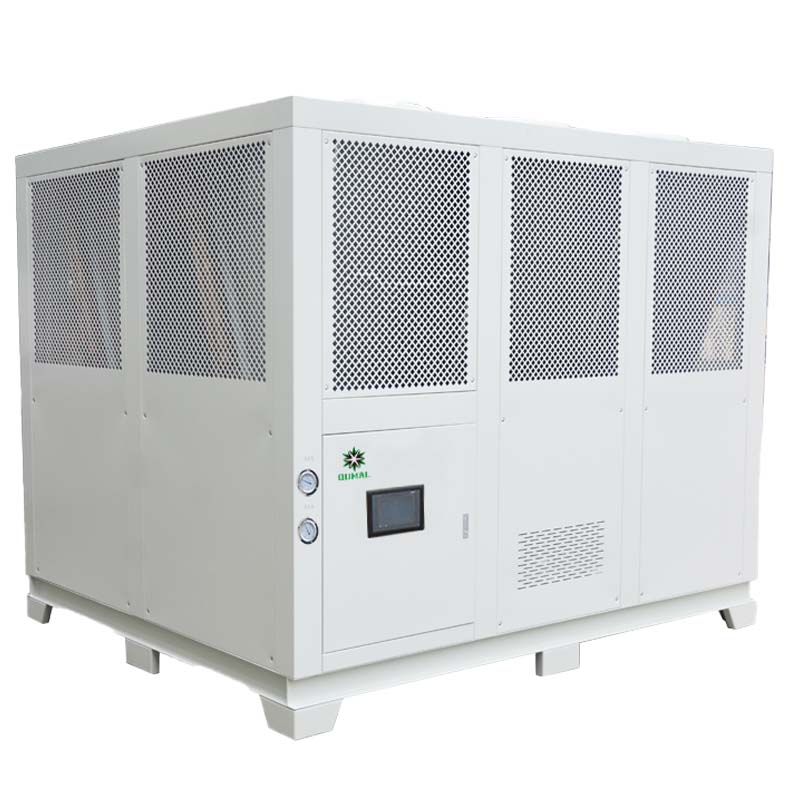
Before you pick an industrial chiller, you need to know how much heat your factory makes. The cooling load shows how much cooling your machines and processes need. You can find this by checking heat from equipment, chemical reactions, and material changes. You should also think about your work schedule. Some times need more cooling than others.
To figure out the cooling load, use this formula:
Q = U × A × (To – Ti) + Qint + Qsol + Qvent
Q means the total cooling load in Watts.
U is the overall heat transfer coefficient.
A is the surface area.
To is the outside temperature.
Ti is the temperature you want inside.
Qint is heat from machines and people.
Qsol is heat from the sun.
Qvent is heat from air moving in and out.
Always plan for the highest cooling needs. This helps you avoid problems when your factory gets busy. Many factories add extra cooling to stop shutdowns if something goes wrong.
Tip: Check your cooling needs during busy times. This keeps your industrial chiller working well and helps stop downtime.
Each factory has its own cooling needs. You must look at what your process needs. Some jobs need cold water at a certain temperature. Others need special fluids that work best at different temperatures. The fluid type and its temperature can change how your air cooled screw system works.
Here is a table to help you see what matters most:
|
Factor |
Description |
|---|---|
|
Cooling Load Calculations |
Accurate calculations are needed to find the right cooling capacity. |
|
Proper Sizing |
Sizing must match your process to work well. |
|
Fluid Type and Temperature |
The fluid type and temperature affect chiller design and how well it works. |
Make sure your industrial chiller matches your process. If your chiller is too small, machines may get too hot. If it is too big, you waste energy and money.
Check how well the cooling fluid works for your process.
Make sure the chiller keeps the right temperature.
Think about how often your process runs and how much cooling it needs.
Where your factory is and how it is set up can change how your industrial chiller works. You must look at the air temperature and humidity where you want to put the chiller. High temperatures or lots of moisture can make the chiller work harder.
Check the temperature and humidity at your site.
Make sure there is enough space for air to move around the chiller.
Think about noise from the chiller and how it affects your workers.
Here is a table to help you plan for space:
|
Aspect |
Explanation |
|---|---|
|
Air Circulation |
Enough air space is needed to keep the right temperature around the chiller. Without it, the chiller may not work well. |
|
Maintenance Access |
Easy access for fixing is needed to keep the chiller working, especially in small spaces. |
|
Physical Footprint |
The chiller size matters. Small units may fit better, but many small ones can take up more space than one big unit. |
Make sure your industrial chiller fits in your factory. Leave room for workers to fix and clean the chiller. Good planning helps your chiller last longer and work better.
Note: Always check local rules about water use and noise. Make sure your site has enough power for your cooling needs.
You must pick the right size air cooled screw chiller. If you choose the wrong size, your system will not work well. First, know the temperature of the water coming in, the cold water temperature you want, and how fast the water moves. Here are the steps to size your chiller:
Find the temperature difference by taking away the cold water temperature from the incoming water temperature.
Figure out the BTU/hr by multiplying the water flow (in gallons per hour) by 8.33 and then by the temperature difference.
Divide the BTU/hr by 12,000 to get the cooling power in tons.
Add 20% more to your answer for safety. This helps your chiller work during busy times or if your factory grows.
You also need to think about all the heat in your factory. This means heat from machines, lights, and people. Use this formula: Capacity (Tons) = Total Heat Load (BTUs) / 12,000. Always plan for the highest cooling needs.
If your chiller is too small, it cannot keep up. Your machines might get too hot and break. If your chiller is too big, it will turn on and off a lot. This wastes energy and wears out the parts faster.
|
Chiller Type |
Impact on Efficiency and Costs |
|---|---|
|
Undersized Chiller |
Cannot meet cooling demand, leading to compressor overloading, increased wear, and higher risk of failure. Risks product quality and safety. |
|
Oversized Chiller |
Cycles on and off too frequently, reducing compressor efficiency, increasing mechanical stress, and wasting energy. Higher initial costs and reduced system flexibility. |
Tip: Check your cooling needs when it is hottest and busiest. This keeps your system safe and working well.
You want your chiller to use less energy and save money. Look for chillers with high air cooled chiller efficiency. The most important numbers are:
Coefficient of Performance (COP): This shows how well your chiller uses electricity to make things cool. A higher number means better efficiency.
Energy Efficiency Ratio (EER): This tells you how much cooling you get for each watt of power. A higher EER means your chiller uses less energy.
Approach Temperature: This is the difference between the refrigerant and the air around the chiller. A smaller difference means better performance.
COP and EER help you compare chillers. If you pick a chiller with a high COP or EER, you will use less electricity and pay less to run it. Air cooled chiller efficiency can go down when it is hot outside, so check how your chiller works in your weather.
Variable speed screw chillers can change how hard they work. This saves energy when your factory does not need full cooling. These chillers also help the compressor last longer because they do not work as hard all the time.
|
Chiller Type |
Energy Efficiency Rating |
Notes |
|---|---|---|
|
Air-Cooled Chillers |
Lower |
Less efficient in high temperatures; uses more electricity for cooling. |
|
Water-Cooled Chillers |
Higher |
Superior heat absorption; uses less electricity for cooling. |
Note: Air cooled screw chiller systems are easier to put in and take care of, but water-cooled chillers may save more energy in big factories.
You need to think about your budget and how much you can save later. The cost of a chiller is the price to buy it, the money to run it, and the cost to fix it. Energy efficient chillers might cost more at first, but they save you money over time.
High-energy chillers can make your power bills lower for 10 to 15 years.
You can get your money back for a high-efficiency air cooled screw chiller in 1 to 3 years.
Air-cooled chillers usually cost less to buy than water-cooled chillers.
Water-cooled chillers may cost more at first, but they often save more money later.
You should look at the total cost, not just the price to buy it. This means you add up the cost to buy, run, and fix your chiller over its life. If you buy an energy efficient chiller, you will save more money as time goes on.
Think about the first cost, the cost to run it, and how much you can save.
Look at your cooling needs and energy prices before you choose.
Remember, a chiller that costs less to run can help your budget every year.
Tip: Doing a cost-benefit check helps you pick the best chiller for your needs and your money.
You want your chiller to work well every day. Reliability depends on good design, strong parts, and regular care. Common problems are frozen evaporators, loud noises, turning on and off too much, leaks, and compressor failure. These problems can stop your factory and cost you money.
Chiller screw compressor technology gives you steady cooling and fewer moving parts. This means there is less chance of something breaking. Variable speed screw chillers also help because they only work as hard as needed, which lowers stress on the system.
Air cooled screw chiller systems need less care than water-cooled chillers. You do not need to treat water for scale. You just clean the coils, check the refrigerant, and change filters. This makes it cheaper and easier to keep your chiller running.
|
Maintenance Task |
Air-Cooled Chillers |
Water-Cooled Chillers |
|---|---|---|
|
Cleaning coils and removing debris |
Yes |
Yes |
|
Inspecting refrigerant levels |
Yes |
Yes |
|
Treating water to prevent scale |
No |
Yes |
|
Lubricating moving parts |
Yes |
Yes |
|
Testing performance and calibrating |
Yes |
Yes |
|
Replacing filters |
Yes |
Yes |
|
Detecting leaks |
Yes |
Yes |
Note: Regular checks and cleaning keep your chiller working well. Good care lowers repair costs and helps your chiller last longer.
If you follow these steps, you can pick an air cooled screw chiller that fits your needs, saves energy, and keeps your factory running well.
It is important to know how air cooled and water cooled chillers are different. Air cooled chillers use fans to get rid of heat. Water cooled chillers use water and cooling towers to cool things down. Each type works best in certain places.
Here is a table to help you compare:
|
Feature |
Air-Cooled Chillers |
Water-Cooled Chillers |
|---|---|---|
|
Efficiency |
Not as good in hot weather |
Better for big factories |
|
Installation Costs |
Cheaper and easy to set up |
Costs more and needs special system |
|
Maintenance |
Simple and not needed often |
Needs more care but lasts longer |
|
Noise Level |
Loud because of fans |
Quieter and usually inside |
|
Ideal Use |
Small areas with less cooling |
Big places with lots of cooling |
Pick an air cooled screw chiller if you want easy setup and lower costs. Water-cooled screw chillers are better for large factories that need lots of cooling.
There are three main kinds of chillers: screw compressor chiller, centrifugal, and scroll. Each one has its own good points.
|
Type of Chiller |
Efficiency Conditions |
Reliability Characteristics |
|---|---|---|
|
Screw Compressor Chiller |
Works best when cooling needs change |
Handles turning on and off well |
|
Centrifugal Chiller |
Best when always working hard |
Good for steady and regular use |
|
Scroll Chiller |
Not explained here |
Not explained here |
A screw compressor chiller is great if your cooling needs go up and down during the day. It also works well if machines start and stop a lot.
Pick an air cooled screw chiller in these situations:
|
Scenario |
Reason |
|---|---|
|
Far away or little water nearby |
No need for water or cooling towers |
|
Projects that need quick setup |
Easy to put in, no water pipes needed |
|
Small budgets |
Costs less at first |
|
City sites with little space |
Small size, can go on rooftops |
|
Places that move or change |
All-in-one and easy to move |
|
Not much cooling needed |
Simple controls and enough cooling |
A screw compressor chiller is a smart pick if you want easy setup, less work to keep it running, and good cooling when needs change. It gives steady cooling for many factories, especially where water is hard to get or space is small.
Tip: Always choose a screw compressor chiller that fits your factory’s size, cooling needs, and budget for the best results.
When you pick an air cooled screw chiller, look for features that help your factory work well. Good features make your system last longer and work better. Here is a table with the most important technical features to check:
|
Feature |
Description |
|---|---|
|
Screw Compressor Technology |
Twin-screw compressors work hard and use less energy. |
|
Automatic Capacity Control |
Changes cooling power to match what you need and saves energy. |
|
Quiet and Vibration-Free |
Runs quietly and does not shake much, which is good for places where noise matters. |
|
Air-Based Heat Exchange |
Uses air to get rid of heat, so you do not need water. |
|
Efficient Heat Dissipation |
Moves heat away fast, even when it is hot outside. |
|
High-Efficiency Axial Fans |
Pulls air through coils to cool them and uses less power. |
|
Compact and Space-Saving Design |
Fits in small spaces, which helps if your factory is crowded. |
|
Energy-Efficient Operation |
Uses smart parts to lower your energy bills. |
|
Low Maintenance Requirements |
Needs little care and no water treatment, so it is easy to keep running. |
These features help keep temperatures steady and protect your machines.
Always check for certifications when you choose a chiller. Certifications show the chiller meets safety and quality rules. Look for marks like UL, CE, and ISO 9001. These labels mean the chiller passed tough tests. Some chillers also have AHRI certification, which proves they meet energy standards. Certifications help you trust your chiller will work well and last a long time.
Tip: Ask your supplier to show proof of certifications before you buy. This helps you avoid problems later.
Modern chillers have smart controls. You can watch and change settings on a screen or your phone. You can see how your chiller works right now. Some systems send alerts if something is wrong. Smart controls help you save energy and find problems early. Many chillers connect to your factory’s building management system. This makes it easy to control everything from one place.
Note: Smart connectivity gives you more control and helps you keep your cooling system working its best.
You want to pick a manufacturer you can trust. A good reputation means the company makes chillers that last a long time. You should look for some signs. The manufacturer should have a history of making reliable chillers. Customers should leave good reviews and share their stories. The company should give clear warranty details. You should be able to ask for changes to fit your factory. The manufacturer should have experience with many industries. A trusted manufacturer helps you avoid problems. You get better help and advice. It is easier to find a chiller that fits your needs.
Tip: Always read what other customers say before you buy.
Warranty and service plans protect your money. They help you save and stop surprises. You should compare what each company gives you. The table below shows what to check:
|
Aspect |
Description |
|---|---|
|
Covered Repair Costs |
You save money on repairs if you have an extended service plan. |
|
Price Stability |
Service plans keep repair costs steady, even if prices go up later. |
|
Extended Warranty Coverage |
Some companies give longer warranties, up to five years, which lowers your costs over time. |
A strong warranty means you do not worry about big repair bills. Your chiller works longer. Service plans also help you plan your budget.
Note: Ask how long the warranty lasts and what repairs it covers before you choose.
You need to get spare parts and help quickly. Fast help keeps your chiller running and stops downtime. You should check if the company keeps common parts in stock. They should ship replacement parts fast. The support team should answer questions and fix problems. The company should give clear instructions for repairs and care. Good support means you fix problems faster. Your factory keeps working and you avoid long delays.
Tip: Pick a company with strong support and easy-to-get parts. This helps your chiller last longer and work better.
First, collect all the important facts about your factory. Write down how big your workspace is and count your machines. Record the hottest and coldest temperatures in your area. Write down how much cooling you need when it is busy or slow. Check what kind of cooling fluid your process uses. List any special needs, like noise rules or space problems. This information helps you pick the right air cooled screw chiller for your job.
Tip: Good data makes it easier to find a chiller that fits your factory’s real needs.
Make a list of chillers that could work for you. Compare each one using these ideas:
See if the manufacturer has certifications like ISO 9001, CE, or ASME.
Look at how fast the company answers questions and fixes problems. Check their service level agreements.
Find out if the supplier can change the chiller design for your process.
See if other customers are happy. If many people buy again, it means good service.
Use a table or checklist to keep track of these things. This helps you see which chiller is best.
Ask your top suppliers for detailed plans. Go through each plan step by step:
Make a User Requirement Specification (URS) with your engineering team. Write your goals, equipment details, and safety needs. Get your quality team to approve it.
Check the Design Qualification (DQ). Make sure the design fits your needs and follows Good Manufacturing Practice rules. Approve the DQ with help from users, engineers, and quality staff.
Review the Installation Qualification (IQ). Make sure the chiller will be put in the right way and meets all design rules. Check that all connections and utilities are ready.
Doing these steps helps you avoid mistakes and makes sure the chiller will work well in your factory.'
Pick the chiller that fits your needs, budget, and long-term plans. Choose the supplier with strong support, good reviews, and clear service plans. Make sure the chiller meets all your technical and safety needs. Sign the contract and get ready for delivery and setup.
Note: Careful planning now helps your air cooled screw chiller work well for many years.
You can make the right choice for your factory by following these steps. Start by understanding your cooling needs. Match chiller features to your process and long-term plans. Use the checklist to compare options with confidence. If you need help, talk to an expert or set up a site visit. Careful planning helps your chiller work well for years.



Friendly Links :
www.dyyseo.com en
en es
es