
Categories
You often find that a water cooled chiller stands out as the preferred choice for industrial users in 2026, especially when you need a reliable cooling solution for high-capacity and energy-intensive operations. Water cooled systems deliver higher efficiency and greater cooling capacity than air cooled models.
|
Feature |
Water Cooled Chillers |
Air Cooled Chillers |
|---|---|---|
|
Efficiency |
Higher |
Lower |
|
Cooling Capacity |
Larger |
Smaller |
|
Longevity |
Longer |
Shorter |
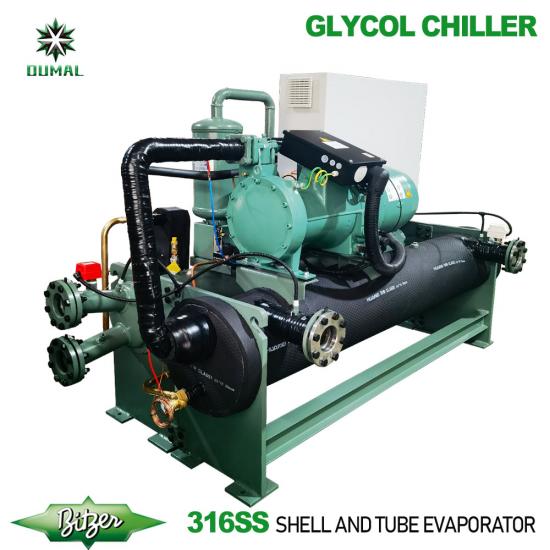
You can look to advanced options like the Water Cooled Screw Chiller Glycol Chiller 40 tr for a robust, precise cooling solution in demanding industries.
Water cooled chillers are more efficient and have a larger cooling capacity, making them ideal for high-demand industrial settings.
Air cooled chillers are easier to install and maintain, suitable for locations with limited water supply or where installation speed is crucial.
Consider energy efficiency ratings like EER and COP when selecting a chiller to ensure lower operational costs.
Evaluate your facility's cooling needs, location, and budget to choose the right chiller type for optimal performance.
Regular maintenance is essential for both chiller types; however, water cooled chillers require more complex upkeep.
When you compare chillers for industrial use, you need to look at several important metrics. These include energy efficiency, cooling capacity, maintenance needs, and noise levels. Energy efficiency often uses the Energy Efficiency Ratio (EER) and Coefficient of Performance (COP) to show how well a chiller uses energy for cooling. Water cooled chillers usually offer higher efficiency and larger cooling capacity, which can lower your operational costs in high-demand environments. Maintenance for water cooled systems is more complex, while air cooled chillers have simpler upkeep. Noise levels also differ, with air cooled chillers often producing more sound due to their condenser fans.
|
Metric |
Water Cooled Chiller |
Air Cooled Chiller |
|---|---|---|
|
Energy Efficiency |
Higher (EER, COP) |
Moderate to Lower |
|
Cooling Capacity |
Larger |
Smaller |
|
Maintenance |
More Complex |
Simpler |
|
Noise Level |
Lower |
Higher |
|
Installation Flexibility |
Less Flexible |
More Flexible |
Tip: You should always check the EER and COP ratings when selecting a chiller for your facility. These numbers help you understand how much cooling you get for the energy you use.
You need to match your chiller choice to your operational environment. Here are some key points to consider:
Water cooled chillers work best in industrial settings with high thermal output. They keep performance steady even when outside temperatures rise.
Air cooled chillers suit areas with limited water supply. You can use your water for other processes instead of cooling.
Air cooled chillers help you meet environmental regulations more easily. They do not create wastewater that needs treatment.
Water cooled chillers stay efficient because ambient air temperature does not affect them as much.
Air cooled chillers tend to be noisier due to their fans, but you can find low-noise models if sound is a concern.
You will often see data centers choose water cooled chillers in regions with enough water and a suitable climate. In contrast, air cooled chillers are popular in places where water is scarce. Many industries now focus on total cost of ownership, so you should weigh both operational efficiency and installation flexibility when making your decision.
You rely on a water cooled chiller when you need precise temperature control for industrial processes. The system uses water as the main medium for heat exchange. Here is how the operation works in four main stages:
Evaporator Stage: Water enters the evaporator. The refrigerant absorbs heat from the water, causing it to change from a liquid to a gas. Cooler water exits the evaporator and moves to your process.
Compressor Stage: The refrigerant gas moves to the compressor. The compressor increases the temperature and pressure of the gas, preparing it for heat release.
Condenser Stage: The high-temperature gas enters the condenser. Here, it transforms into a high-pressure liquid and releases heat to the cooling water.
Expansion Valve Stage: The refrigerant passes through the expansion valve. It expands and cools before returning to the evaporator, starting the cycle again.
You see this technology in advanced models like the Water Cooled Screw Chiller Glycol Chiller 40 tr. This chiller uses a Bitzer semi-hermetic screw compressor and a Siemens PLC control system. You benefit from reliable cooling, energy efficiency, and easy operation. The design supports demanding applications in industries such as plastics, food processing, and pharmaceuticals.
Note: Water cooled chillers offer stable performance even in environments with high ambient temperatures. You achieve consistent cooling for critical processes.
You use an air cooled chiller when you want a simpler installation and less reliance on water. The system uses ambient air to remove heat from the refrigerant. You find air-cooled chiller units in facilities with limited water supply or where installation flexibility matters.
|
Feature |
Air Cooled Chillers |
Water Cooled Chillers |
|---|---|---|
|
Cooling Method |
Uses ambient air for heat exchange |
Uses water as the primary heat exchange medium |
|
Energy Efficiency |
Generally less energy-efficient than water cooled |
More energy-efficient due to better heat transfer |
|
Space Requirements |
Requires less space, easier to install |
Requires more space for cooling towers and pumps |
|
Maintenance |
May need more frequent maintenance |
Generally requires less frequent maintenance |
|
Water Usage |
Does not require water for cooling |
Requires a constant supply of water |
You notice that air cooled chillers suit smaller industrial applications or locations where water conservation is important. You also find that maintenance is straightforward, but you may need to check the system more often.
You need to consider the upfront costs when choosing a chiller for your facility. Water cooled chillers usually require a higher initial investment. This is because you must install extra equipment like cooling towers and pumps. The following table shows the average initial cost difference for industrial projects:
|
Chiller Type |
Initial Cost Difference (USD) |
Percentage Difference per RT |
|---|---|---|
|
Water-Cooled Chiller |
$128,000 |
~10% more expensive |
|
Air-Cooled VRF |
N/A |
N/A |
Water cooled chillers cost more at the start, but you may benefit from greater efficiency and longer service life.
You should look at the long-term expenses for each chiller type. Water cooled chillers generally have lower energy costs. They use less power because water transfers heat more efficiently than air. Air cooled chillers save on water and maintenance, but you may see higher utility bills due to lower efficiency.
Water cooled chillers typically have lower energy costs but higher maintenance and water costs.
Air cooled chillers are easier and cheaper to maintain but may lead to higher utility bills over time.
Air-cooled chiller units have higher electrical demand because their fans run continuously.
In cooler climates, the extra energy use of air cooled chillers may be less significant.
Water cooled chillers consume less power but require extra costs for water treatment and operation.
Tip: You can reduce your operating costs by choosing a chiller that matches your climate and process needs.
You must plan for ongoing maintenance. Air cooled chillers require regular cleaning of fans and coils to prevent dust buildup. Maintenance costs are generally lower. Water cooled chillers need frequent cleaning and water treatment to prevent scaling, corrosion, and algae. This leads to higher operational costs.
|
Chiller Type |
Maintenance Requirements |
Cost Implications |
|---|---|---|
|
Air-Cooled |
Low maintenance; requires regular cleaning of fans and coils to prevent dust buildup. |
Generally lower maintenance costs. |
|
Water-Cooled |
Requires regular cleaning and water treatment to prevent scaling, corrosion, and algae. |
Higher operational costs due to more frequent maintenance. |
You can extend the life of your chiller by following a strict maintenance schedule.
You see water-cooled chillers deliver outstanding chiller efficiency in industrial settings. These systems use water to absorb heat, which allows them to operate at lower condensing temperatures. Cooling towers help maintain optimal conditions, so you benefit from reduced energy consumption. Water-cooled chillers perform well in large-scale applications because water transfers heat more effectively than air. You notice that these chillers maintain high energy efficiency even when ambient temperatures rise. This means you get consistent cooling performance for demanding processes.
Water-cooled chillers offer:
Lower kW per ton of cooling, which reduces your operating costs.
Stable chiller efficiency in hot climates.
Reliable cooling performance for high-capacity systems.
Water-cooled chillers are ideal for industries that require precise temperature control and continuous operation. You can rely on these systems to keep your production running smoothly.
You find air-cooled chillers easier to install and maintain, but their chiller efficiency is usually lower compared to water-cooled models. Air-cooled systems use fans to move air across coils, which removes heat from the refrigerant. High ambient temperatures can reduce their energy efficiency, especially in large-scale operations. These chillers work best for small to medium loads or where water is scarce.
|
Chiller Type |
Efficiency Description |
|---|---|
|
Air-Cooled |
Typically less efficient (higher kW/ton). Efficiency is affected by high ambient temperatures. Best for small to medium loads or where water is scarce. |
|
Water-Cooled |
More efficient, especially for large capacity systems. Cooling tower allows operation at lower condensing temperatures. Lower kW/ton, leading to reduced operating costs over lifecycle. |
You should consider air-cooled chillers if your facility has limited water resources or you need a flexible installation. For large industrial applications, water-cooled chillers provide better chiller efficiency and energy efficiency, making them the preferred choice.
You face a more involved installation process when you choose a water cooled chiller for your facility. Water cooled chillers require cooling towers, pumps, and extra piping. You must plan for these components because they take up significant space. You need to allocate room for the chiller unit, cooling tower, and mechanical equipment. You also must ensure proper water supply and drainage systems. This setup increases the complexity of your project.
You often see water cooled chillers installed in dedicated mechanical rooms or outdoor spaces with enough area for cooling towers. You benefit from stable performance, but you must invest in infrastructure. You may need to coordinate with engineers and contractors to design the layout. You also must consider local regulations for water usage and discharge.
Tip: You should evaluate your available space and infrastructure before selecting a water cooled chiller. Planning ahead helps you avoid costly changes during installation.
You experience a simpler installation process with air cooled chillers. These units do not require cooling towers or pumps. You only need to place the chiller on a flat surface, such as a rooftop or outdoor pad. You save space because air cooled chillers have a compact design. You also reduce installation time and costs.
You can install air cooled chillers in locations with limited space or where water is scarce. You do not need to build extra infrastructure for water supply or drainage. You benefit from lower complexity and faster setup.
|
Chiller Type |
Installation Requirements |
Complexity Level |
Cost Level |
|---|---|---|---|
|
Air-Cooled |
Simpler installation, no need for cooling towers or pumps. |
Low |
Lower |
|
Water-Cooled |
Requires cooling towers, pumps, and additional piping, leading to higher complexity. |
High |
Higher |
Note: You should consider air cooled chillers if you want a quick installation and minimal infrastructure changes. This option works well for facilities with space limitations or strict budgets.
You need to follow a regular maintenance schedule to keep your chiller running efficiently. Water cooled chillers and air cooled chillers require different tasks, but both benefit from consistent attention. Here are the most common routine maintenance steps you should perform:
Daily Checks
Record operating temperatures at the inlet and outlet.
Monitor system pressures.
Check refrigerant levels using the sight glass.
Weekly Checks
Test water chemistry and adjust treatment for water cooled chillers.
Clean strainers and filters in water systems.
Monthly Checks
Inspect compressor oil for clarity and acidity.
Examine motor starter contacts and electrical connections.
Clean condenser and evaporator coils.
Replace or clean filters and strainers.
Check glycol concentration and quality.
Verify system pressures and flow rates.
Annual Maintenance
Review mechanical, electrical, and fluid systems in detail.
You should also look for visible leaks and unusual noises during inspections. Regular upkeep helps prevent breakdowns and keeps your chiller working at peak performance.



Friendly Links :
www.dyyseo.com en
en es
es