

Categories
New Blog
Selecting the right industrial chiller for a CNC machining center is important for maintaining spindle performance, machining accuracy, and equipment reliability. During high-speed machining, heat generated by spindle motors, hydraulic systems, and other components can affect operating stability if it is not properly managed.
A suitable CNC machine chiller helps maintain the required coolant temperature, removes excess heat, and supports consistent machine operation. However, choosing a chiller based only on horsepower or cooling capacity can lead to problems such as insufficient cooling, excessive energy consumption, or unstable temperature control.
This guide explains the key factors manufacturers and machine operators should consider when selecting an industrial chiller for CNC machining centers.

Industrial air-cooled chiller for precision equipment cooling
CNC machining centers generate heat during continuous operation. The spindle, bearings, motors, hydraulic units, and cutting processes all contribute to thermal loads. If this heat is not effectively controlled, temperature fluctuations may affect machine performance and component service life.
For precision machining applications, thermal stability is particularly important. Changes in spindle temperature can cause thermal expansion, potentially affecting dimensional accuracy and machining consistency.
A properly selected machine tool cooling system can help:
The exact cooling requirements depend on the CNC machine design. Some machining centers require dedicated spindle cooling, while others may need cooling for hydraulic systems, electrical cabinets, or multiple heat-generating components.
Cooling capacity is one of the most important specifications when selecting an industrial chiller. An undersized unit may struggle to maintain the required temperature during peak operation. An oversized unit may increase initial investment and operating costs without providing meaningful benefits.
Start by identifying the total heat generated by the equipment that needs cooling. The best reference is the CNC machine manufacturer's technical documentation, which may specify the required cooling capacity or heat dissipation rate.
If the heat load is calculated from the circulating water system, a commonly used formula is:
Cooling Capacity (kW) = 1.163 × Water Flow Rate (m³/h) × Temperature Difference (°C)
This formula applies to water-based circulation under typical conditions. For glycol mixtures or other fluids, the actual density and specific heat capacity must be considered.
For example, if a cooling circuit requires a water flow rate of 2 m³/h and has a temperature difference of 5°C, the estimated heat transfer is approximately 11.63 kW.
This calculation helps estimate the cooling load of a known water circuit. It should not replace the CNC manufacturer's specified chiller capacity, especially when multiple cooling circuits or variable operating conditions are involved.
When selecting a CNC machine chiller, also consider ambient temperature, operating hours, machine duty cycle, and possible future production expansion. A qualified chiller supplier can help verify the final capacity and recommend an appropriate model.
Air-cooled and water-cooled chillers are two common options for industrial cooling. The right choice depends on installation conditions, cooling requirements, available utilities, and maintenance preferences.
Air-Cooled Chillers
Air-cooled chillers use fans and air-cooled condensers to release heat into the surrounding air. They do not require a separate cooling tower, making installation relatively straightforward.
They are suitable for workshops where cooling tower infrastructure is unavailable or where a simpler installation is preferred. However, their performance can be affected by high ambient temperatures and insufficient ventilation around the unit.
Water-Cooled Chillers
Water-cooled chillers transfer heat through a water-cooled condenser, typically connected to a cooling tower or another heat-rejection system.
They are often considered for larger cooling loads, centralized cooling systems, and industrial facilities with existing cooling water infrastructure. Their selection should account for water quality, condenser maintenance, cooling tower capacity, and installation costs.
For individual CNC machining centers, air-cooled units may offer a practical solution. For factories operating multiple machines, a centralized water-cooled system may be worth evaluating.
Explore air-cooled industrial chillers and industrial water chillers to compare available configurations.
Not every CNC machining center operates at the same cooling temperature. The required supply temperature depends on the spindle design, machine specifications, cooling circuit, and surrounding environment.
Before purchasing a chiller, confirm the following parameters:
Temperature stability is particularly important for high-speed spindle cooling. Excessive temperature variation may contribute to thermal changes in machine components and affect machining consistency.
For example, OUMAL's 10-ton air-cooled chiller for PCB CNC drilling and milling equipment is designed for a 10–15°C cooling application. Its published specifications include temperature control accuracy of approximately ±1°C.
However, these specifications are model-specific and should not be treated as universal requirements for all CNC machining centers. Always follow the equipment manufacturer's recommended temperature range.
Cooling capacity alone does not guarantee effective heat transfer. The circulation system must deliver sufficient coolant flow at the pressure required by the machine.
When evaluating an industrial chiller, check:
A chiller with adequate refrigeration capacity may still perform poorly if its pump cannot overcome the pressure drop in the piping and machine circuit.
It is also important to distinguish between the pump's rated flow and the actual flow delivered under system resistance. Ask the supplier for pump performance data and confirm the operating point against the machine's requirements.
For CNC applications, a reliable control system is essential. The chiller should maintain the target temperature while protecting the refrigeration and water circulation components.
Useful features to evaluate include:
For automated production lines, communication between the chiller and CNC control system may also be necessary. Confirm whether the required alarm contacts, interlocks, or communication protocols are available before placing an order.
Installation conditions can influence both chiller performance and maintenance costs. Air-cooled models need sufficient clearance around the condenser to ensure proper airflow. Installing the unit in a poorly ventilated area may reduce heat rejection efficiency.
For water-cooled models, consider cooling tower connections, water treatment, drainage, and access to condenser cleaning points.
Other practical considerations include:
For factories planning multiple CNC machines, it is also worth comparing individual chillers with a centralized cooling arrangement. The final decision should consider production layout, load variation, redundancy, and maintenance arrangements.
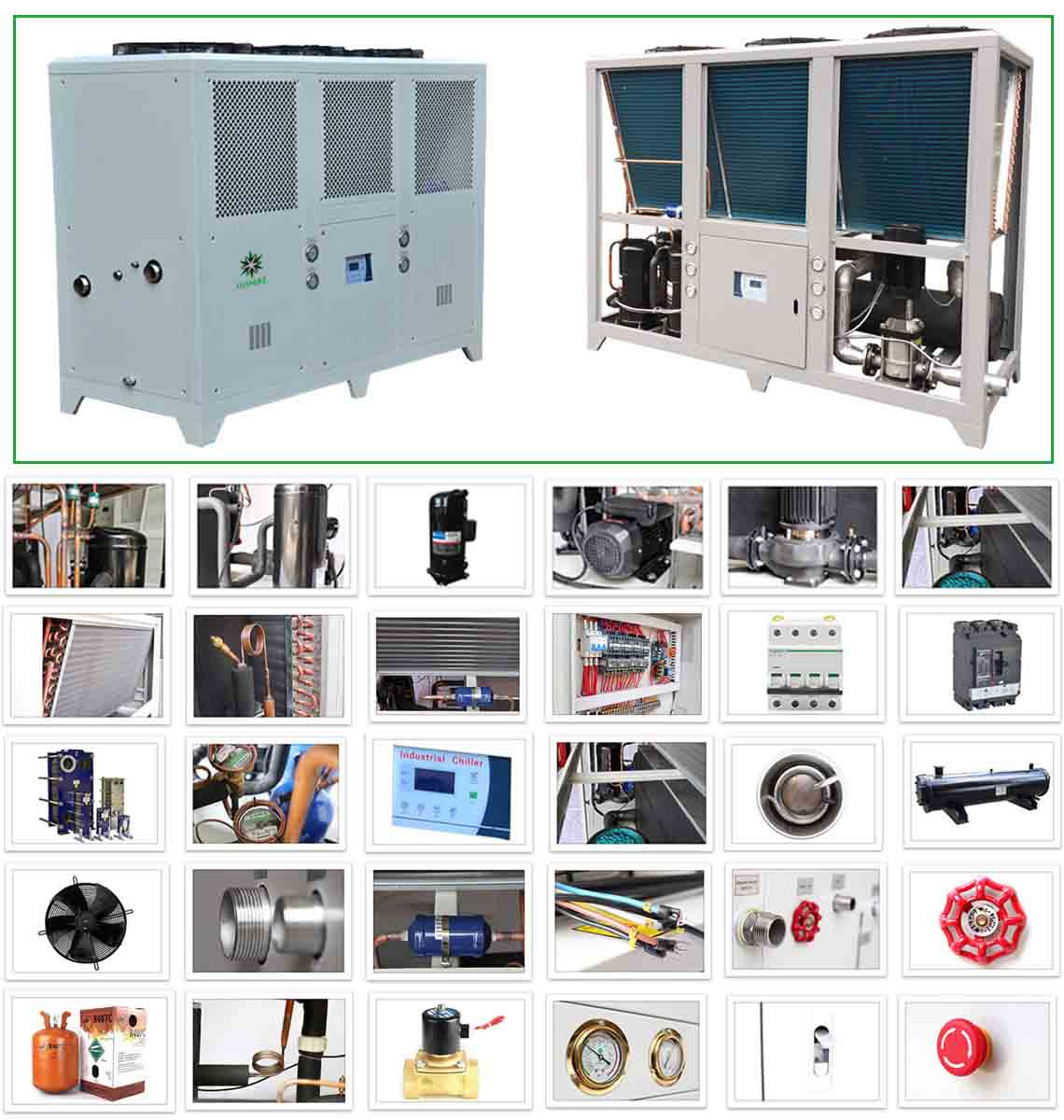
Industrial chiller equipment and refrigeration system components
Before requesting a quotation, prepare the following information to help suppliers evaluate your application accurately.
| Parameter | Information Required |
|---|---|
| Machine information | CNC machine type, brand, and model |
| Cooling capacity | Required heat load in kW or TR |
| Temperature | Required inlet and outlet temperatures |
| Water flow | Required flow rate and pump pressure |
| Cooling method | Air-cooled or water-cooled preference |
| Power supply | Voltage, phase, and frequency |
| Operating conditions | Ambient temperature and daily operating hours |
| Installation | Available space and piping distance |
Choosing a chiller manufacturer with industrial cooling experience can simplify equipment selection and system integration.
OUMAL specializes in industrial water chillers, air-cooled and water-cooled chiller systems, and customized cooling solutions. Its product range covers different industrial cooling capacities and configurations.
For CNC-related applications, OUMAL offers a dedicated 10-ton air-cooled chiller for PCB CNC drilling and milling equipment. The model is designed for spindle cooling and includes temperature control, water circulation, and protective functions.
Depending on the machine's cooling load and installation requirements, customers can also explore CNC drilling machine chillers or discuss a customized industrial cooling configuration with the engineering team.
To learn more about the manufacturer's capabilities and industrial cooling experience, visit the OUMAL company profile.
1. What size industrial chiller do I need for a CNC machining center?
The required chiller size depends on the machine's total heat load, spindle cooling requirements, coolant flow rate, and operating conditions. Check the CNC manufacturer's specifications first, then have the chiller capacity verified by an experienced supplier.
2. Is an air-cooled chiller suitable for CNC machines?
Yes. Air-cooled chillers are suitable for many CNC cooling applications, especially where cooling tower infrastructure is unavailable. They are relatively easy to install, but adequate ventilation and ambient temperature conditions must be considered.
3. What water temperature is recommended for CNC spindle cooling?
There is no universal temperature setting for all CNC spindles. The required temperature depends on the spindle manufacturer, machine design, and operating conditions. Always follow the equipment manufacturer's recommended coolant temperature range.
4. Can one industrial chiller cool multiple CNC machines?
Yes, a centralized chiller can serve multiple machines if its total cooling capacity, water flow, pressure, and distribution system are properly designed. The system should also account for simultaneous operating loads and individual machine requirements.
5. What information should I provide when requesting a CNC chiller quotation?
Provide the CNC machine model, required cooling capacity, inlet and outlet water temperatures, flow rate, pump pressure, power supply, ambient temperature, and installation conditions. This information helps the supplier recommend a suitable configuration.
Choosing an industrial chiller for CNC machining centers requires more than comparing cooling capacity and equipment prices. Temperature stability, water flow, pump pressure, installation conditions, and control functions all influence the performance of the complete cooling system.
By confirming these technical requirements before purchasing, manufacturers can select a more suitable cooling solution and support reliable CNC machining operations.
Looking for a suitable CNC machine chiller? Contact OUMAL with your machine specifications and cooling requirements to discuss an industrial cooling solution for your application.



Friendly Links :
www.dyyseo.com en
 es